
 Written by:
 Fleas are one of the most common external parasites affecting cats. A single flea infestation can quickly spiral into a household-wide problem, affecting your cat’s comfort, health, and even your home environment.
The good news? With the right approach, fleas are both treatable and preventable. Recognizing the signs early, choosing effective treatments, and committing to consistent prevention can keep your cat comfortable and your home flea-free.
Signs of Fleas on Cats and Why Early Treatment Matters
Fleas are small, fast-moving parasites that feed on your cat’s blood. Consistently shown to be a top cause of itching and skin complaints in our feline pets, they’re more than just a nuisance.
Although they are possible to see with the naked eye, they can be difficult to spot amongst a pet’s fur. This means that many infestations go unnoticed until symptoms appear.
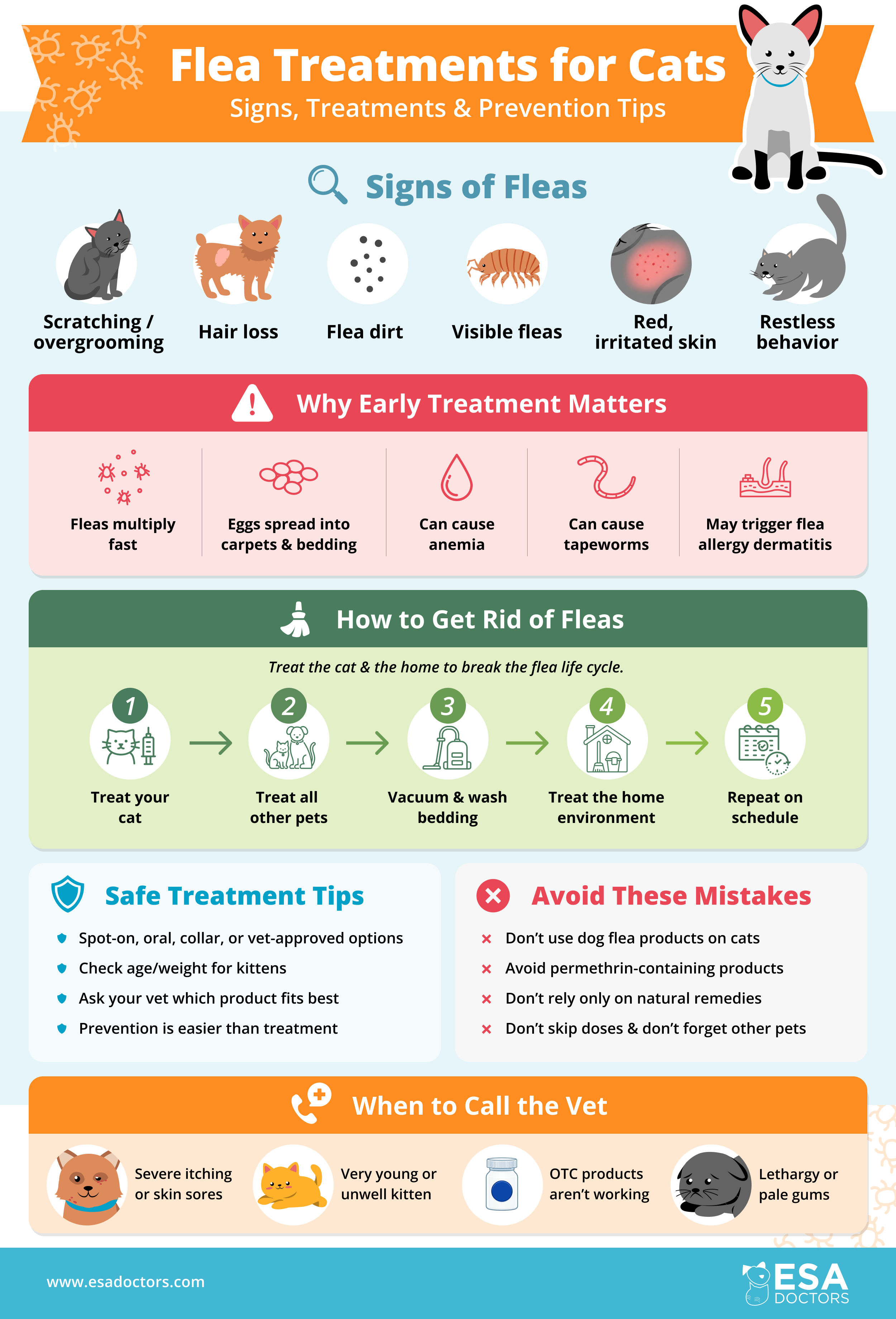
Common signs of fleas in cats include:
- Excessive scratching, licking, or grooming
- Hair loss, especially around the neck and base of the tail
- Small black specks (“flea dirt”) in the coat
- Visible fleas moving through the fur
- Skin irritation, redness, or scabs
- Restlessness or behavioral changes
Prevention is Better Than a Cure
Fleas reproduce rapidly: one female flea can lay dozens of eggs per day, which fall into carpets, bedding, and furniture and then hatch under warm conditions (such as in a centrally heated home). A few fleas can swiftly turn into hundreds, leading to a major home infestation.
If left untreated, fleas on cats can have consequences beyond itchy skin. A mild infestation can quickly become severe, leading to:
- Anemia due to blood loss (especially in kittens or older cats)
- Tapeworm infections
- Persistent skin disease
Some cats are allergic to proteins found in flea saliva, a condition called flea allergy dermatitis (FAD). For these cats, even a single flea bite can trigger intense itching and skin inflammation, which makes preventative flea control even more important.
Using preventive products or being vigilant and intervening very early protects both your cat and your home.
How to Get Rid of Fleas on Cats (Step-by-Step Guide)
As a veterinarian, I’ve treated many patients with fleas, and there’s one fact that stands out: eliminating fleas requires treating both your cat and their environment.
Step 1: Treat your cat
Start with an effective flea treatment product. Popular options include topical treatments like Frontline Plus or prescription products such as Revolution, both of which kill fleas at different stages of their life cycle. Discuss a suitable product for your pet with your veterinarian.
Step 2: Treat all pets in the household
Fleas aren’t hugely fussy, and if one pet has them, likely, any other furry friends in the home might also be affected. Dogs and other pets must also be treated to prevent reinfestation.
Step 3: Clean your home thoroughly
- Vacuum carpets, rugs, and furniture daily for at least 1–2 weeks
- Wash bedding (yours and your pet’s) in hot water
- Dispose of vacuum bags or empty canisters promptly
Step 4: Environmental control
As well as treating the adult fleas that live on your cat, it’s also necessary to treat your home to prevent flea eggs or larvae from hatching out and re-infecting your pets. Household sprays can be a very effective option alongside treating your pet. In severe infestations, professional pest control may be necessary.
Step 5: Repeat treatments as directed
Consistency is key. Fleas can be difficult to get rid of because many products only target one stage of their life cycle. Many flea products require monthly or three-monthly applications to fully break the life cycle, depending on the specific product.
Types of Flea Treatment for Cats
There are several types of flea treatments available, each with advantages and limitations. Your veterinarian will be able to discuss which products will suit you and your pet best.
Topical Treatments (Spot-on)
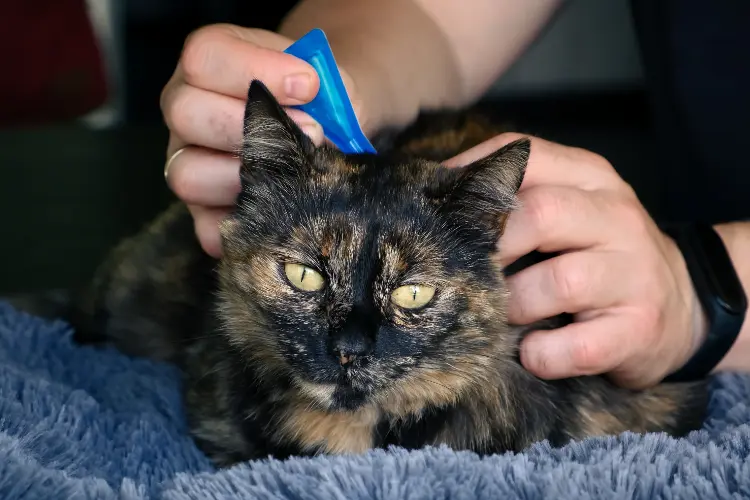
Spot-on products are liquid medications applied to the skin, usually to the back of the neck. There are a range of options, including:
- Frontline Plus: Widely available over the counter; kills adult fleas, eggs, and larvae
- Revolution: Prescription-only; also protects against heartworms, ear mites, and some intestinal parasites
Pros:
– Easy to apply.
– Variable duration to suit individual needs.
Cons:
– Some cats dislike the application.
– It can be washed off accidentally.
Oral Treatments
Given as tablets (or chewable/palatable versions), which can often be hidden in food or a treat.
Pros:
– No residue on the coat.
– Useful for cats that dislike topical products.
Cons:
– Some cats are hard to medicate with tablets.
– Limited options for cats compared to dogs
Flea Collars
Modern collars release insecticides over time and are fitted with safety features, such as a quick-release mechanism.
Pros:
– Long duration (some up to 8 months)
Cons:
– Variable effectiveness.
– Safety concerns with older or low-quality products.
– Can be lost or removed accidentally.
Injectable Treatments
Injectable flea treatments are less commonly used, but can be a useful option for owners who find medicating their pets difficult.
Pros:
– Long duration.
– No handling medication at home necessary.
Cons:
– Travel to a veterinary clinic for each treatment
“Natural” Flea Treatments
Over the last few years, there has been a rise in the popularity of so-called ‘natural’ treatment options, including essential oils, herbal sprays, and home remedies. It’s important to note that most “natural” products are not proven effective, and some (like tea tree oil) can actually be toxic to cats.
Use with caution and always consult a veterinarian before trying alternative treatments.
Over-The-Counter vs Prescription Products
- Over-the-counter (OTC): Products like Frontline Plus are convenient and widely accessible
- Prescription products: Options like Revolution often provide broader parasite protection and may be more effective in difficult cases. Prescription products have undergone rigorous trials to prove both the safety and efficacy of the product.
Over-the-counter products are often more convenient to access and may be cheaper, but there is less guarantee that they will be totally effective. Your veterinary team will always be happy to discuss flea prevention and treatment options with you.
Finally, there are two hugely important points when it comes to choosing a flea product for a cat:
- Never use dog flea products on cats
- Always avoid permethrin-containing products, as these can be highly toxic to cats
Safe Flea Treatment for Kittens
Kittens are especially vulnerable to fleas due to their small size and underdeveloped immune system, but treatment must be approached carefully, as not all products are suitable.
The safest option is to use a veterinary-approved product that is specifically labeled for kittens. Always check the minimum age and weight on the product label before use.
For very young kittens (under 6 weeks old), flea combing daily with warm, soapy water may be the safest option. If in doubt, always consult a veterinarian – especially for kittens under 8 weeks old.
Flea Prevention for Cats (Long-Term Control)
Fleas spread fast. Prevention is far easier and cheaper than treating an infestation.
Top tips for effective flea prevention
- Use flea preventatives year-round, at the interval recommended by the manufacturer for the specific product (often monthly or three-monthly)
- Products like Frontline Plus or Revolution can be part of a routine prevention plan
- Treat all pets in the household consistently
- Maintain regular household cleaning, especially in warmer months
- Treat indoor-only cats as well as other pets. They can still get fleas from other pets, visitors, or even on your clothing.
Can humans get fleas from cats?
Humans are not suitable hosts for cat fleas, but an infested pet and home environment can still lead to repeated bites.
Flea bites on humans present as itchy red bites/spots, often around ankles or lower legs. They usually cause temporary irritation rather than long-term problems.
Common Mistakes When Treating Fleas on Cats
You may think that cat flea treatment should be simple, but it can be surprisingly hard, especially with complicating factors such as a cat with FAD or a household with multiple pets. Even well-intentioned owners can struggle to eliminate fleas due to common pitfalls.
These are the most common mistakes I have seen as a veterinarian:
- If fleas are present, only treating the cat, not the house, can lead to re-infection
- Skipping doses or stopping treatment too early
- Using dog products on cats can be very dangerous for your cat
- Relying solely on “natural” remedies
- Not treating all pets in the household
When to See a Veterinarian
While many flea infestations can be managed at home, veterinary input is important in certain situations.
Always seek veterinary advice if:
- Your cat has severe itching or skin lesions, causing discomfort
- You suspect flea allergy dermatitis
- Your kitten is very young or unwell
- Over-the-counter treatments aren’t working
- You notice signs of anemia, such as lethargy or pale gums
A veterinarian can recommend the most effective and safest treatment plan, including prescription options like Revolution when needed.
Does your cat provide emotional support?
Work with a licensed professional to get a legit ESA letter in your state.


Leave a Comment