

 Legally reviewed by:
 Emotional Support Animals can come in all shapes, sizes, and species, unlike service animals, which have primarily fallen into the capable paws of the canine species. Any species of animal can be considered an ESA. However, due to many prejudices and stereotypes, many states and cities have Breed-Specific Legislation that prohibit Pit Bulls.
In this post, we will cover some facts on ESAs and why the breed-specific laws CAN NOT prohibit the use of Pit Bulls as Emotional Support Animals.
What is an Emotional Support Animal?
An Emotional Support Animal (ESA) is any animal that is trained to respond to its owner’s diagnosed mental or emotional disability. These animals do not have the same rights and privileges as a service dog, but they are protected by federal laws for housing. To qualify a pet as an Emotional Support Animal, you must get an ESA letter from a licensed mental health professional on the provider’s official letterhead.

What is Breed-Specific Legislation?
Breed-specific legislation (“BSL”) is the name of a variety of laws enacted by some states and numerous municipalities or cities around the country. These laws ban dog breeds that the legislators have deemed to pose a danger to the community. Pit Bulls and other “bully breeds” often fall into this category. However, such legislation fails to take into account that not all Pit Bulls (or the many other “Bully” breeds) are a danger to people or other animals. In fact, these dogs, raised in the right environment, are extremely loving, gentle and loyal.
Even though local laws may try and enforce breed-specific legislation laws, Federal laws protecting Emotional Support Animals supersede these local laws, also known as “preemption” of federal law over state or city laws. The FHA or Fair Housing Act protects individuals with ESA Pit Bulls to live with their handlers in their permanent homes and apartments.
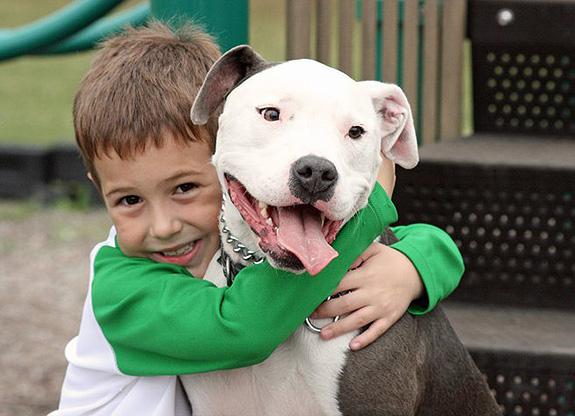
Can Pit Bulls Be Used as Emotional Support Dogs?
Pit Bulls can be wonderful emotional support dogs and they must be accepted by your landlord as an ESA. Your dog must be well behaved and be under your control to qualify as an Emotional Support Animal. If your ESA causes damage or is a threat to other people or animals living in your community, your landlord will have legal grounds to have your ESA removed.
If you already have a Pit Bull and are using it as an Emotional Support Animal, Animal, or are thinking of adopting one, make sure to have your paperwork in order to prove that the dog is a support system rather than a pet.
What If My Landlord Says They Don’t Accept Pit Bulls?
If your landlord says they don’t accept Pit Bulls, ask whether they’re denying your dog because of a general breed rule or because of your specific dog’s behavior. A landlord can’t deny an ESA based only on breed, size, weight, or a no-pets policy. Nor can a landlord deny an ESA based on stereotypes or suppositions. A denial for an ESA has to
be based on factual evidence.For more context, see our article on when landlords can deny an Emotional Support Animal.
If your landlord denies your request for accommodation based on your pet’s breed, respond in writing, attaching your valid ESA letter, and ask for the specific reason for the denial. Keep the focus on your disability-related need and your dog’s actual behavior, not stereotypes about Pit Bulls. If they can’t support the denial, review our article on what to do after an ESA denial for next steps.
What If My Landlord Claims Pit Bulls are an Undue Hardship Because of the Insurance?
Insurance can make things more complicated, but it doesn’t automatically give a landlord the right to deny your Pit Bull ESA. If they claim their insurance won’t allow Pit Bulls, ask them to provide that reason in writing.
A landlord should be able to show real proof, such as a cancellation notice, written denial from the insurance company, or a major premium increase tied to your assistance animal. Landlords are also required to find a different insurance carrier that will provide coverage. You will also likely be required to have an insurance policy that specifically covers your dog. A general statement like “our insurance doesn’t allow Pit Bulls” is not enough.
You can also ask whether they looked for comparable insurance that would allow the accommodation. If they can’t support the denial, consider contacting a fair housing agency, tenant rights group, disability rights organization, or housing attorney for guidance.
See if your Dog Qualifies as an Emotional Support Animal





I’m a disabled US Army vet with schizophrenia. I live alone and it’s very tough. My loneliness causes depression, which causes stress, which causes my schizophrenia to get worse. When I moved in my landlord said no pets but everything I’m reading online says you can have a service dog or an ESA regardless of what your landlord says. It also said the right to have a service dog or ESA is protected by federal law. I’m hoping to get a pitbull. I hope my landlord understands. I’ve lived here a year and a half and my rent has never been late. I don’t want any trouble from my landlord.
Thank you for your service. ESAs are protected by law precisely because they help people with conditions like yours. To ensure your rights are respected by your landlord, you should make sure to get a valid ESA letter from a licensed healthcare professional.
I have a beautiful huskie female esa,and being kicked out of my apartment when there are pitbulls and rotwalerrs allowed to be on the property how is that,I’ve been forced to move and found a place and they want allow dogs either and I’m so worried to say anything because it’s so hard to find a place to live.what can I do
If you are fully qualified as an ESA owner by having an ESA letter, then a landlord cannot discriminate against you solely because your ESA is a specific breed.
In housing cases, the courts have sided with pit bull owners. See retired police officer with a trained pit bull service animal sues the city of Aurelia, Iowa and Florida man files to keep his emotional support pit bull in Miami .
Go live in apartment buildings that allow pets! Allow the rest of us – who are dog-phobic or have allergies or just generally dislike dogs to be left alone in peace. There are SO MANY apartments that now allow dogs, in fact they advertise all their pet-friendly perks in a bid to attract dog people. So, let the rest of us have our dog-free apartments without you guys trying to “sneak into the apartments” under the guise of “emotional support animals”. Quit ruining the quality of life for others just because of your “I don’t care if there’s other buildings that allow pets… I want THAT building!” . Believe me – everybody in that pet-free building you sneak your way into hates you and your dog.
Comments like these lack compassion and empathy. This statement is akin to telling people that need accommodation for a disability in the form of a ramp or audio assistance that they should all go live in a separate complex and not bother “regular” people and their living needs. There is a reason ESA protections are enshrined in federal law – they are designed to prevent discrimination against the disabled and allow for the disabled to have the same opportunities that the non-disabled have. ESA owners are always responsible for making sure their animals do not bother other tenants or create safety issues.
It’s unfortunate to use an ESA designation to bypass aggressive breed restrictions that put other animals and people at risk. I don’t begrudge anyone the need for an ESA, but that shouldn’t override the safety concerns that conce with certain breeds. There are plenty of non aggressive breeds that fit the bill. Too often I’ve seen disastrous results for those promised a safe apartment community, and a person fraudulently uses the ESA to bring their aggressive dog in. Yes. I’ve been attacked by one such dog. Laws need to change.
Actually, if you look at the facts, according to the American Temperament Test Society, 86.8% of all pit bull pass their temperament test and that is 4th out of the 122 breeds in the test. According to another study, also by the American Temperament Test Society, they rank 2nd in temperament. (Better than even Golden Retrievers) Also, according to other studies, in 84% of all fatal attacks, breed being an irrelevant factor, the dogs are neglected and/or abused. Even the CDC doesn’t support BSL (Breed Specific Legislation). This is due to the CDC finding BSL to be largely ineffective and a waste of public resources. Also, in just 1988, pit bulls were nick named the “nanny dog” due to their gentle and loving nature towards children. Besides, the real reason for a dog of any kind being bad tempered is bad treatment and abuse by the owner. Yet the owner gets off almost Scott Free when the dog bites someone. Therefore Discrimination against Pit bulls (Pitty Puppers as I like to call them) due to their breed is very unfair and you should know that the dog was probably mistreated and attacked you out of fear and in self defense of a perceived, even if not present in your mind, threat. The advocacy agency Pit Bull Rescue Center, in fact, does not recommend selecting pit bulls to be guard dogs because they are usually too friendly to strangers. So that dog that attacked you most likely had an abusive owner. It probably had nothing to do with the dog itself.
Okay seriously? I have had only pit bulls. Please inform yourself. ANY breed can be vicious and attack. It’s how the animal is raised along with breeding. I have also worked in shelters and vets. I have had dogs behave aggressively toward me. The breeds: Dalmatian, that had also bitten 3 children and was scheduled to be put down. A Chow and Weimaraner, which actually broke skin, he was faster than I was. And I worked with ALOT of dogs and cats. Pit bulls are actually people pleasers. The point is, I am sorry you had the experience you had and I know it could have been traumatic for you. But any breed can be aggressive. Don’t judge an entire breed on one experience.
People that don’t like dogs or pets are usually sociopaths. Congrats, sounds like that’s exactly what you are from your post.
Dogs, animals in general, are wonderful companions and are way better than human beings. If u don’t have love for animals, u truly don’t have love for anything. Because a person who loves and respects animals is a great human being!! Atleast be courteous for those that have love for animals.
Bravo !!!couldn’t have said it better myself!! These people dont realize. Lets put them in cages not give them food, water , attetion are love. Beatin everyday by a person. How would they want to act when let out of their cage
I owned two Pitbulls and they are amazing dogs. I love them so much ♥️♥️♥️They earned it. They are loving, obedient and loyal. They are part of me. I can’t imagine my life without them. I hear a lot of bad things about Pitbulls. I honestly believe that they will be aggressive if their owners are aggressive or mistreat them. I treat and care for them as if they are my kids. I’m a responsible owner when I take them out I’ll make sure that their leash is secured and before someone pet them I’ll make sure that I let my babies know that it’s okay, and to be nice before anyone pet them.
Couldn’t agree more. I have a Pitbull which we found nearly dying. I loved all my dogs as my children, however the love and bond we have is amazing. I’ll use the expression who rescued who.
The ignorance over pit bulls is baffling, people won’t even inform their selves and just judge off of what the tv and other news outlets tell them.
It’s just sad how many pit bulls got put down or non adopted for this reason, I adored two and they’re the kindest animals ever.
But people have deemded pitbulls as “vicious” when actually they we’re originally trained to be nanny dogs but because of people who don’t do research and think they know everything they automatically assume it’s not as easy as you think
I don’t like you. The way you think. And your negative outlook. I don’t want to know you or any problems you have In a bad situation you would beg for help. I mean begg. Reason I say this there may come a time when you are trapped in a fire or having a heart attack that you would really expect someone to help or save your life. I own a ESA. A Pittbull. And I am very Bipolar PTSD. Well. I’m am a Firefighter that has saved many lives. I would never watch someone suffer in pain and would give my life to save yours. Well my dog saves me. Bipolar from a childhood of torture is a battle that you couldn’t imagine. Humans will judge but my dog doesn’t. I can run into a fire no hesitation but I can not reminisce memories. I’m 50 years old and I truly love everyone except myself. God is first then my family. And I love the ones who broke my bones and milested me. Imagine that. So know someone’s battle before you judge or lable them. One day it could be you that is struggling to stay alive. God bless. Steve Garrett. Richmond Va.
Thank You, You made me cry a grown man. I 50 with bipolar type 2.
Everybody’s pet is an ESA. Thats ‘s the problem. Hawk is legit. The people who cry ESA and aren’t even under the care of a therapist are ruining the curtesy for the people for whom the law was intended. It always comes down to money and entitlement. If you have the money, buy your right to do what you want. I’m seeing it all over the web. Buy your ESA letter from a website. No doctor necessary because they have the letterhead. This is BS.
Don’t hate me, I love pits. I love all dogs. But many have ruined it for the few who need it.
We also do not support websites that issue letters without an actual licensed health care provider being involved. We support rules that would crack down on online services not following proper procedure. Our platform connects clients to licensed mental health professionals who make an independent determination regarding whether the client qualifies for an ESA. We do not directly issue the letter, they come directly from the LMHP on their letterhead, which their license and contact information included.
This doesn’t even make sense. You obv don’t love pits if you’re taking the time to write a comment that is against ANY breed being able to be considered an ESA. You fail to explain exactly how The many who are using ESA registration Are ruining it for the few who “deserve it more than others”.
I’ve never had a pit bill before. I now have one as my ESA. Jade female 5yrs old has to be the sweetest most loving dog I ever had. Open heart survivor, Jade has the ability to save my life, I had given up.
I have read all the comments before mine and I understand about ESA’s and Pit bulls, but I am still confused because according to what I read elsewhere, Certain cities in Montana have strict Pitbull bans and a Pitbull as an ESA can be denied by a property management company due to being on the vicious breed list. Is this true? I am confused because State law says I cannot have my Pitty as an ESA, but here you say Federal law prohibits breed discrimination, I am lost. She is the most lovable gentle creature. She even plays with our cats and bunnies and has never hurt any animal or person.
This is a somewhat complicated question with no clear cut answer unfortunately. It is true that the Department of Housing has stated that breed restrictions are not allowed and the Fair Housing Act is federal law. However, states and local entities have their own rules regarding certain breeds. Our understanding is that federal law can override state laws, but we are not lawyers and in reality you may face an uphill battle making this argument with a landlord and local enforcement who are following their local rules.
This article is kind of confusing because it says that the FHA supersedes local laws (bylaws), but then goes on to recommend double checking that owning a pit bull is legal in your area beforehand. If the FHA protects ESAs regardless of breed, why would you need to check if owning a pit bull is legal if it becomes a certified ESA?
We are not lawyers, but our general understanding is that federal law supersedes state and local law. However, if you have a local ordinance that prohibits pit bulls, you are likely to run into issues with the local authorities. You could then argue about your rights under federal law, but that can turn into a complicated ordeal. That is why we recommend checking local laws – you should be aware of what issues you might run into.
My dogs are registered with my city not as pitbulls. But because they “look” like a pitbull they say I cant have them. My city’s has any dog that looks like a pitbull banned. I gave a copy of my ESA letter to the city and at court told the judge I had ESA letters for my dogs. He said he doesnt care if they are ESA or Service if there is a ban they are not allowed. Is this true? Or is there a way I can fight this amd prove this judge wrong.? I own my home as well..
Emotional support animals and service animals are exempt from breed restrictions.
All you need is a letter from a doctor? Do you have to register your emotional support pitbull? If so where.
The recommendation for an emotional support animal must come from a licensed mental health professional, which may include a psychologist, psychiatrist, registered nurse, social worker or doctor. There is no such thing as an official “registry” for emotional support animals. You do not “register” an ESA. A pet qualifies as an ESA if you have a recommendation letter from a LMHP.
Are landlords legally able to ask for a prescription for your service animal?
Service dogs do not require a prescription.