

 Legally reviewed by:
  Medically reviewed by:
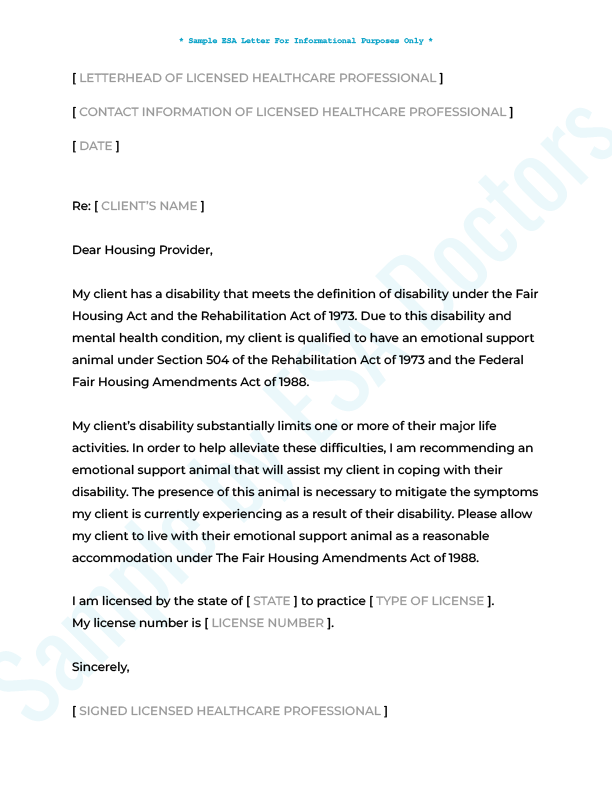
 ESA Letter requirements for an Emotional Support Animal include all of the following:
- Information about the healthcare professional who wrote it
This includes identifying information such as: their license number, state of practice, contact information, and signature (digital is acceptable). - Confirmation about your mental health
The letter should state you have a mental health condition that is helped by the presence of an Emotional Support Animal — it does not have to specify your condition. - Validity date
The letter should also have the date the letter was issued. - Additional info if there’s more than one ESA
Mention of additional animals, and the reason for why more than one is necessary, if you need more than one Emotional Support Animal.
You’ll want to double-check that your document includes everything required. This can make the difference when it comes to living with your ESA in no-pet. Landlords have the right to deny a tenant’s Emotional Support Animal if the document submitted to them is deficient. But, they are required to engage in an interactive process, so if the issue is related to insufficient documentation (for example, the healthcare provider forgot to date the letter), it is possible for you to resubmit the letter once it conforms.
Here is an example of a letter with the required parts included in it:
ESA Letter Requirements
HUD’s housing regulations have set requirements for an ESA letter. Under these rules, it must be written by a licensed mental health professional and explain that you have a mental health condition which symptoms are relieved or reduced by the presence of your Emotional Support Animal.
Before these rules came out, there was sometimes confusion about what a proper document should look like. HUD publishes these rules so there is predictability and certainty for tenants, landlords, and healthcare providers when it comes to expectations how they should write the letter.
With a legitimate ESA letter, you can live in rental housing where pets may not normally be allowed and avoid paying pet deposits and fees.
ESA Doctors, est. 2015
Things you DON’T need
An ESA letter does NOT require any of these things:
- any type of certification or registration number, as there is no official registry or certification program for Emotional Support Animals
- your specific diagnosis or medical history — this would violate privacy laws
- notarization or statements under penalty of perjury from the healthcare provider
- an original “wet ink” signature – a digital signature is perfectly acceptable
It does not necessarily need to identify a specific animal. That’s because you can qualify for an emotional support animal before adopting your Emotional Support Animal, and the letter is documenting your need for an assistance animal in general, not certifying a particular animal.
How can I get a letter with everything I need?
Under HUD’s rules, only licensed healthcare professionals can write an ESA letter for you. You can’t get it from a provider like a dentist because, although they are licensed healthcare professionals, they don’t offer mental health evaluations. However, you can get one from your licensed therapist.
To get an ESA letter for housing that’s properly written and has everything you need in it, try to find a healthcare professional who understands Emotional Support Animal Fair Housing Laws and has experience dealing with housing providers. That will help ensure your landlord doesn’t find any holes in the documentation or have a hard time verifying your ESA letter as reasons to deny your ESA.
Do you already have a letter? Compare it to the items above before sending it to your housing provider.
Don’t have one yet? A professional licensed in your state must determine whether you qualify. See how to request an ESA letter.





Leave a Comment