
 Legally reviewed by:
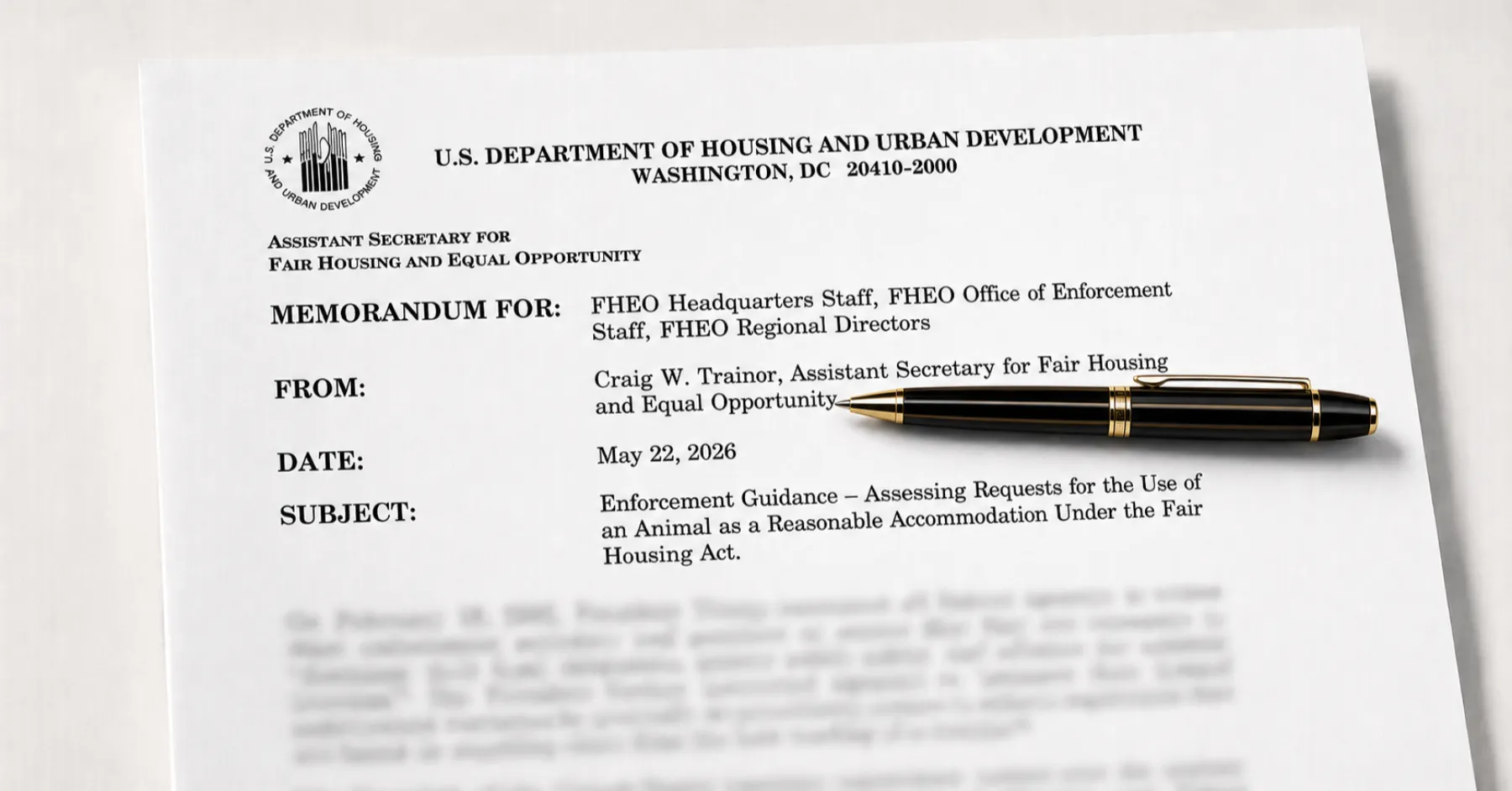
 On May 22, 2026, a federal memorandum from the U.S. Department of Housing was issued that many ESA owners found alarming. You might think that it means landlords will now be able to deny your animal, charge you pet fees, or evict you, but that’s not the case. The situation is more complicated than that, and it’s much less scary than headlines suggest.
This article will walk you through what actually changed and what your rights are as a current ESA owner or someone thinking about getting an emotional support animal.
The Memo Changed Federal Enforcement, Not the Law!
The most important thing to understand about HUD’s memo is that the Fair Housing Act, the actual federal law that protects disabled tenants, was not changed. The law still requires landlords to make reasonable accommodations for people with disabilities. Without HUD’s guidelines, lawsuits involving emotional support animals will become more uncertain and lead to greater judicial discretion. In other words, the outcomes of lawsuits about ESAs will depend heavily on the judge presiding over the individual case.
What really changed is that HUD, the federal agency responsible for investigating housing discrimination complaints, announced it will no longer pursue complaints from tenants whose ESAs aren’t specifically trained to perform a task. That’s it, that’s the major change.
Going forward, HUD wants animals to meet a standard similar to what the Americans with Disabilities Act uses for service animals: the animal needs to be individually trained to do something specific that relates to your disability. A dog trained to interrupt a panic attack or provide deep-pressure therapy could qualify as a psychiatric service dog or an assistance animal.
Another very important detail to note: unlike the ADA, which only allows dogs to be service animals, HUD’s memo specifically states that other animals will still be allowed to be assistance animals. So if your cat is trained to perform a disability-related task, HUD says that counts for housing rights purposes.
This may lead to a new category of assistance animals for housing that we can call Trained Assistance Animals.
State Laws Were Not Affected At All!
In many states, you don’t even need federal law or HUD memos to have ESA housing rights. Many states have their own fair housing laws that are sometimes stronger than the federal baseline, and the HUD memo has no power over any of them. State agencies operate completely independently from HUD.
California has its own state laws, as one example. Under California’s Fair Employment and Housing Act, landlords must accommodate disabled tenants with ESAs regardless of whether the animal is trained. That protection is enforced by California’s Civil Rights Department, which the HUD memo cannot touch. California tenants can file complaints with the CRD, pursue a claim under the Unruh Civil Rights Act, or file a lawsuit under state law.
These are some other states that have ESA laws or agencies that may enforce fair housing rights for emotional support animals without training requirements:
- Arkansas
- California
- Colorado
- Florida
- Kentucky
- Louisiana
- Michigan
- Massachusetts
- Minnesota
- Montana
- New York
- New Jersey
- Oklahoma
- Tennessee
- Wisconsin
Your ESA Letter is Still Needed
Even without HUD’s guidelines in effect, states that have ESA laws still require a letter from a licensed mental health professional. To comply with your state’s law requirements, you’ll still need to show your landlord an ESA letter.
Courts, state agencies, and fair housing organizations will also still use it as evidence if you have a claim. What changed is that HUD won’t use it as the basis for a federal complaint if your animal isn’t trained. But in private lawsuits under state law, an ESA letter is still necessary.
As with an ESA letter under the old HUD guidelines, your ESA letter must come from a healthcare professional licensed in your state, whether in person or online.
Pet Fee Waivers May Still be Valid
If you’re in a state with its own ESA protections, your fee waivers remain valid.
Whether a pet fee is legal in your specific situation now depends on many factors, including your state’s laws, the nature of your disability, your documentation, and whether the fee actually creates a real barrier to your housing. This area of law is, unfortunately, genuinely unsettled right now if you’re in a state without separate ESA laws. Seek advice from a local housing or disability advocacy group before you accept any changes from your landlord.
Your Right to Sue Is Untouched, and Landlords Are Not Exempt from Discrimination Liability
The HUD memo explicitly says that tenants can still go to court. HUD’s enforcement decisions do not bind federal courts and state courts. If you feel your landlord is violating the Fair Housing Act or your state’s laws, you can still file a lawsuit. Plenty of tenants have won fair housing cases without HUD’s involvement. That option is fully available to you.
Courts weigh the law directly, not HUD’s internal policy. A judge isn’t going to dismiss your case because HUD changed its memo. However, the chances of success in federal (rather than state) courts are now much more uncertain than before.
If you are a landlord and considering what to do about the new HUD memo, first, you should recognize that state law may prevent you from denying ESAs. In addition, you still have an obligation to accommodate disabled tenants under the Fair Housing Act and the Americans with Disabilities Act. You are also still obligated to accept ESAs that are trained to perform disability-related tasks or work. You should consult with an attorney before rejecting an ESA tenant because of the current uncertainty created by this memorandum.
If Your ESA Is Already Approved, You’re Probably Okay
If your landlord has already approved your ESA accommodation, that approval remains in effect. Especially if you live in a state that has its own ESA rules. Your landlord can’t reverse it just because of a federal memo. It’s complicated, but they would probably need to take separate legal steps to undo it, which could expose them to legal risk.
The greater concern is for people moving to a new place, applying for new housing, or dealing with a landlord who’s feeling newly emboldened in a state without ESA laws. Some landlords who previously complied only because they feared HUD complaints may now feel like they can push back. Just know, however, that in these states, you still have the federal Fair Housing law, which requires landlords to make accommodations for disabled tenants. You just will not be able to rely on HUD to pursue a complaint for you.
If your animal performs tasks related to your disability, it may be better to request an exemption from your landlord for service animal status instead of ESA status. Some ESA owners already have animals that perform tasks such as disrupting destructive or harmful behaviors, alerting them to oncoming panic attacks, etc. These tasks could qualify your animal as a service animal if you also have a mental health disability.
Civil Rights and Housing Organizations Are Still a Major Resource
HUD was never the only enforcement option. Civil Rights and housing organizations, nonprofits that investigate housing discrimination, and lawyers can file complaints and lawsuits independently. In some cases, these organizations can sue in their own name when landlord practices harm their work, even without an individual tenant as the named complainant. These organizations were already handling a large share of housing discrimination cases before this memo, and that work continues.
HUD Has Signaled Future Changes, and Nothing Is Final
The memo says HUD intends to go through a formal public rulemaking process to update its assistance animal regulations, which haven’t been revised since 1989. That process requires HUD to publish a proposed rule, accept public comments, and issue a final rule. It takes time, often years. No timeline was given, and until a final rule is issued, the underlying laws remain unchanged.
That rulemaking process also matters because it’s a formal opportunity for ESA owners and disability advocates to submit comments and push back. It’s possible that the next HUD memo will include clearer and fairer guidelines for both ESA owners and landlords.
What to Do If Your Landlord Is Giving You Trouble
Start by putting your accommodation request in writing if you haven’t already. Email works well because it automatically creates a record. Keep copies of everything your landlord sends back.
If your landlord denies your request or threatens to charge pet fees, don’t agree to anything under pressure and don’t assume you’re out of options. You can point them to state ESA laws that clearly still give you protection. You can also point out that the federal Fair Housing Act still requires them to make accommodations for disabled tenants.
Reach out to a fair housing organization in your area by searching “[your city] fair housing” or contact a disability rights group in your state. Many offer free advice and can quickly evaluate your situation.
And remember, training your ESA for service work can be another option if your condition requires it, and can be done yourself.
ESA laws can change quickly and vary from state to state. This article is meant as a resource but is not legal advice or guaranteed to be accurate at all times. Please consult with a local housing organization or a lawyer if you have specific legal questions.



Leave a Comment