
 Written by:
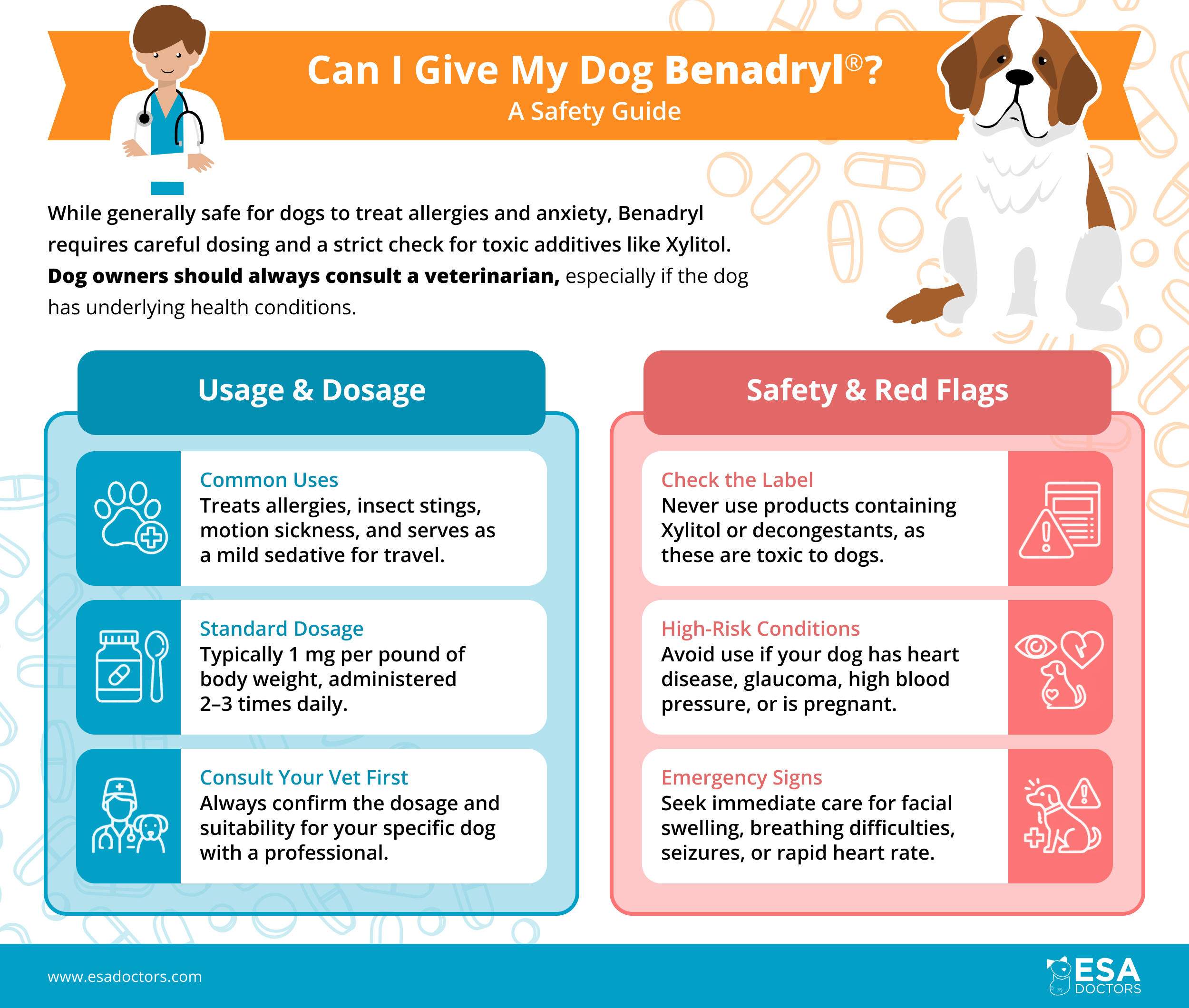
 Benadryl (diphenhydramine) is a human medication. Your veterinarian may also prescribe Benadryl for your dog. For example, it can be helpful for mild allergic reactions and motion sickness. It is generally well tolerated, and serious side effects are relatively rare. However, it may neither be safe nor effective for some dogs. You should always consult your veterinarian before giving any medication (including Benadryl) to your dog, especially if your dog has an underlying medical condition or is taking any other medication.
What is Benadryl?
Benadryl contains diphenhydramine, which is an antihistamine. Histamine is a chemical released in the body during an allergic response. It causes the symptoms we see, such as hives and itching. Antihistamines such as diphenhydramine work by blocking histamine receptors. So, while Benadryl doesn’t stop histamine being released, it does stop the body from responding to the histamine.
It’s important to note that Benadryl in other countries has a different active ingredient. In the U.S., Benadryl contains diphenhydramine. In the U.K., for example, Benadryl contains cetirizine or acrivastine. The safety and dosage of different antihistamines vary, so be sure to check the label carefully.
Common Uses of Benadryl in Dogs
Benadryl is not licensed for use in dogs; it is a human medication, meaning its use in dogs is ‘off’ or ‘extra’ label. This means vets can prescribe it to some pets in some circumstances.
It’s important to note that the rules for using off-label medication in pets vary by country. For example, if you are in the U.K., you are not allowed to buy a human medication to give to your pet! This means it’s important that you check the rules in your country or area: a conversation with your vet is always a good start.
A vet may suggest Benadryl for dogs to treat:
- Mild allergic reactions
- Mild allergies
- Mild vaccine reactions
- Mild reactions to insect bites or bee stings
- Mild anxiety, including in the car (although there are likely to be better options for treating this)
- Motion sickness (although there are also licensed medications that are likely to work better for this)
- Mast cell tumors: Benadryl may be prescribed before surgery to remove a mast cell tumor.
If you think your dog is having an allergic reaction to something, you must contact your veterinarian as soon as possible. Allergic reactions can be life-threatening in dogs and need stronger medication than antihistamines. Trying Benadryl at home can delay appropriate treatment and put your dog in danger.

When NOT to Use Benadryl in Dogs
You should always check with your vet if Benadryl is the right choice for your dog. There may be other medications that work better, for example, in atopy (long-term, ongoing allergies). Benadryl may also not be safe for your dog if they have underlying medical conditions or are taking other medications.
In some situations, Benadryl may be the wrong choice. For example, in serious allergic reactions or snake bites. In these situations, it’s essential that you call your veterinarian ASAP. Trying medications at home will delay life-saving veterinary treatment and can interfere with medications your vet would need to give.
Extra caution is needed when giving Benadryl to dogs with:
- A sensitivity to diphenhydramine or other antihistamines
- Respiratory disease
- Heart disease
- Liver disease
- Epilepsy
- Glaucoma
- Prostate disease
- Urine retention
- High blood pressure.
You should not use Benadryl in these cases, unless your vet specifically instructs you to. You should also not give Benadryl to your dog if they are pregnant, nursing, very young, or geriatric, unless instructed to do so by your vet.
Keep in mind that your dog may be sedated, so don’t give Benadryl if you’re about to take your dog swimming or any other activity that requires your dog to be alert.
Diphenhydramine can interact with other medications, so always ask your vet if Benadryl is OK for your dog.
Benadryl Dose for Dogs
Benadryl typically starts working within 30–60 minutes and lasts 6–12 hours. However, this varies from dog to dog. The correct dose will depend on what Benadryl is treating, and any underlying health conditions or other medications your dog has. As a general rule, the dose of diphenhydramine in dogs is between 1 and 4 milligrams per kilogram body weight, which equates to between 0.4 and 1.8 milligrams per lb. It is usually given every 8 to 12 hours.
Remember, this is for general information only. You should never give Benadryl to your dog without first consulting your veterinarian, and you should always follow their dosing instructions. Your vet will advise you whether Benadryl is the right choice and the correct dose for their unique medical history and needs.
Always Check the Label
It’s essential that you check the Benadryl label and only use the single-ingredient version, meaning that the medicine ONLY contains diphenhydramine. Some versions contain other ingredients that are highly toxic for dogs, such as pseudoephedrine (a decongestant). Be sure there are no sweeteners (such as xylitol) or alcohol, both of which are also toxic for dogs. Be especially careful to check the ingredients in liquid versions. Your vet will be able to advise you on the best formulation for your dog.
Common Side Effects of Benadryl in Dogs
Although Benadryl is considered a relatively safe drug for dogs, all drugs can cause side effects. Common side effects of Benadryl in dogs include:
- Sedation
- Excitability (called a paradoxical reaction)
- Dry mouth
- Difficulty passing urine
- Sickness
- Diarrhoea
- Reduced appetite
- Constricted (small) pupils
The most common side effect is sedation, meaning your dog may be very sleepy!
Signs of an Overdose
If you accidentally give your dog too much Benadryl, the signs of an overdose can be more serious. Signs of a Benadryl overdose in dogs can include the side effects listed above, plus:
- Abnormal heart rate
- Changes to blood pressure
- Drooling
- Seizures
Signs of an overdose will depend on how much medication your pet received. Although rare, in severe cases, an overdose could be fatal.
When to Call Your Vet
You should call your veterinarian straight away if:
- You suspect your dog is having an allergic (or anaphylactic) reaction to something (you may see hives, itching, swelling of the face, difficulty breathing, fast heart rate, pale gums, wobbliness, or collapse).
- Your dog has been (or may have been) bitten by a snake
- You have overdosed your dog with Benadryl, or suspect an overdose
- Your dog is experiencing side effects or an adverse reaction to Benadryl
- Your pet’s condition is getting worse
If you have any concerns about your dog, it’s better to be safe than sorry! Trust your gut and contact your vet for advice.
Key Points
Benadryl can be useful in certain situations, under veterinary guidance. In some situations, Benadryl is unlikely to be effective, such as in ongoing chronic allergies (atopy). In other situations, it may actually be dangerous. For example, it may delay treatment of life-threatening anaphylaxis.
The dose of Benadryl will depend on your dog’s weight, any underlying medical conditions, and any other medications they are on. Your vet will advise you as to the correct dose for your dog’s unique needs.
You should never buy over-the-counter medication for your pet without knowing exactly which one you are supposed to get. You should never give your pet any medication without first consulting your veterinarian.
Do you need to show your landlord that you require your emotional support animal to live with you? Get an ESA letter in 3 easy steps.




Leave a Comment