
 Written by:
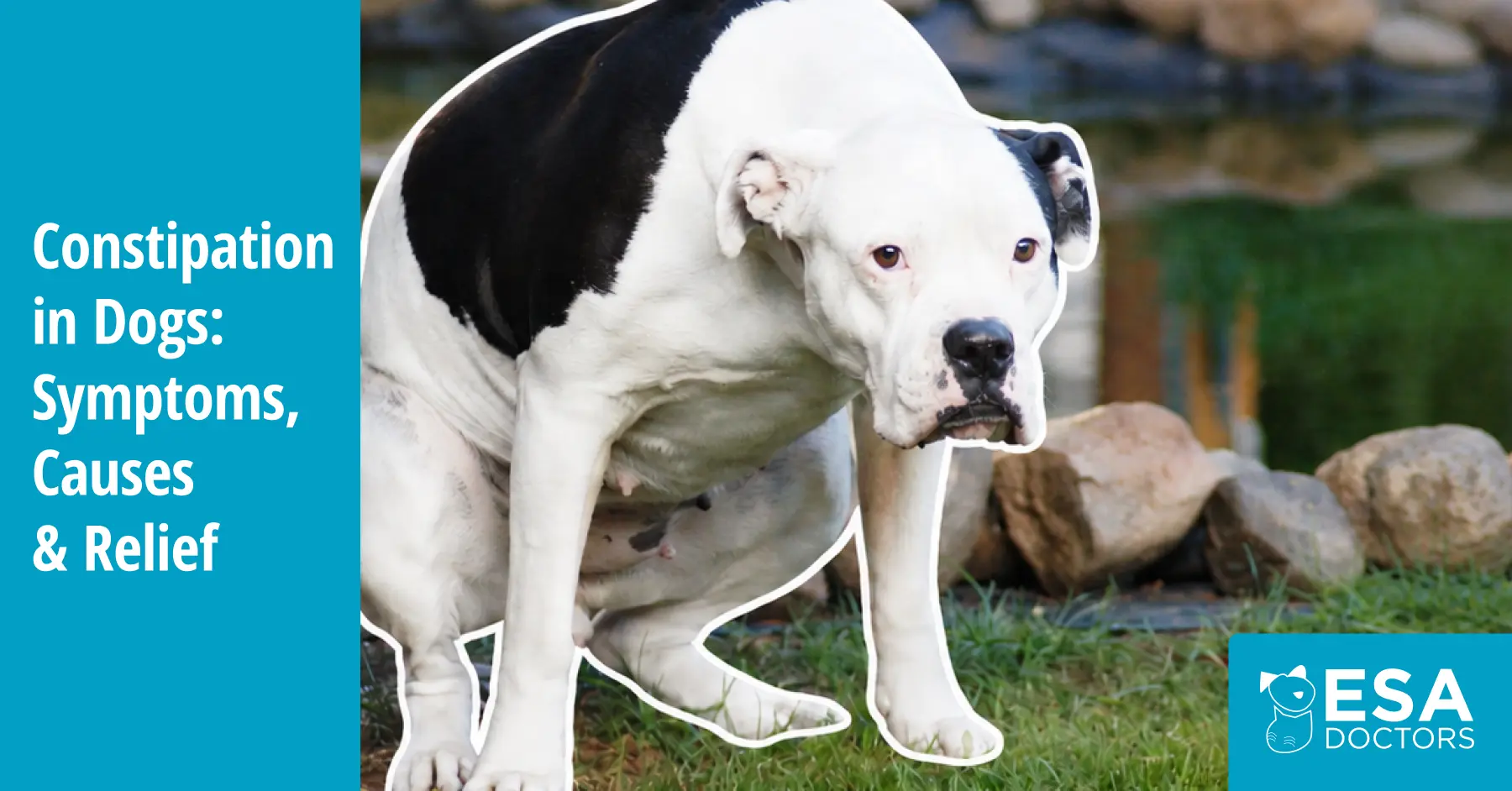
 Constipation in dogs is usually mild and resolves within a few days. The most common cause of constipation in dogs is a dietary issue, such as not drinking enough water or a sudden change in diet. However, there are some much more serious causes. If your dog has been constipated for more than 48 hours or is unwell with it, you should contact your vet straight away.
What is Constipation?
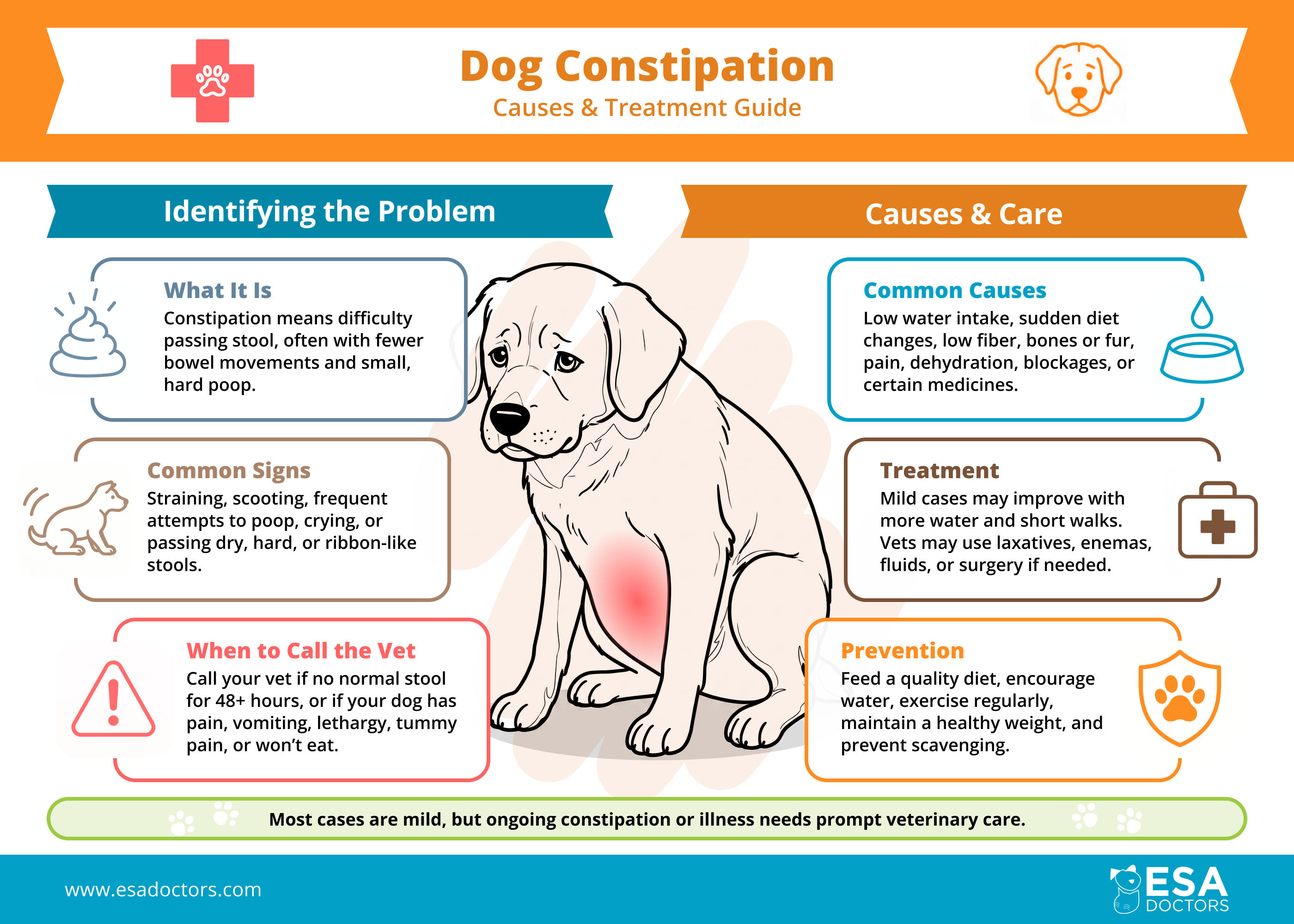
Most dogs poo between one and three times a day. Constipation is defined as difficulty passing stools or passing stools less frequently than expected. Usually, constipation causes uncomfortable, unsuccessful straining. Constipated dogs may pass small, hard nuggets of stool.
The colon (large intestine) has the important job of resorbing water from the stool. So, if the stool sits in the colon for too long (such as during constipation), too much water is resorbed. This means the retained stool becomes drier and harder, making the constipation even worse.
Constipation in dogs is usually mild and short-lived. However, it can be caused by more serious medical conditions.
Symptoms of Constipation in Dogs
So, how do you know if your dog is constipated? Here’s what to look out for:
- Straining
- Scooting
- Trying to poo frequently, with little or none produced
- Crying or vocalizing when pooing
- Passing fewer than usual, or no stools
- Passing smaller, very dry or hard stools
- Passing thin, ribbon-like stools
- Mucous or blood on a hard stool
Constipated dogs may pass a small amount of liquid stool, which can be confusing! This is liquid stool managing to squeeze past the feces that are stuck in the back passage.
Sometimes it can be hard to tell if your dog is straining to poo or wee. If you aren’t sure, it’s safest to see a vet straight away. If they are straining to pee and nothing is coming out, this is a life-threatening medical emergency.
When to call a Vet
If your dog hasn’t managed to poo for 48 hours or more, it’s time to take them for a check-up. Similarly, call your vet if you suspect your dog is constipated, and they show any of these signs:
- Pain
- Lethargy (quieter or subdued)
- Tummy pain
- Off their food
- Vomiting
These signs should be treated as a possible medical emergency, and you should call your veterinary clinic straight away.
Remember, you know your dog better than anyone! Trust your gut and contact your vet for advice if you have any concerns.
What causes constipation in dogs?
There are many possible causes of constipation in dogs, some more serious than others. Common causes of constipation in dogs include:
Diet
Diet can have a big impact on the quality of a dog’s stools, so it’s one of the most common causes of constipation in dogs. This includes:
- Eating material that can’t be digested, such as bones or fur (from over-grooming)
- A sudden change in diet
- Not enough fiber in the diet
- A poor-quality, hard-to-digest diet
Pain
Anything that makes it painful to pass stools or to get into the correct position to pass stools can cause constipation. This includes:
- Arthritis in the hips or back legs
- A fracture of the pelvis
- Spinal issues, such as IVDD (intervertebral disc disease)
- Rectal (bottom) pain, such as an anal gland abscess
Dehydration
When an animal becomes dehydrated, the body tries to conserve (hold on to) as much water as possible. This includes reabsorbing as much water as possible from the poo in the colon. This makes the poo drier and harder than it should be, leading to constipation. Dehydration has many possible causes, such as:
- Not drinking enough water
- Warm weather
- Kidney disease
Blockages
Anything that blocks the normal passage of poo through the stomach, intestines, or anus can lead to constipation, such as:
- A foreign body (when a dog eats something they shouldn’t, and it gets stuck in the guts)
- A tumor in the intestines
- A tumor pressing on the intestines (from elsewhere in the abdomen)
- An enlarged prostate (in male dogs)
Drugs
Certain drugs can slow the passage of material through the gut or increase water loss, causing constipation. Examples include:
- Diuretics
- Anaesthesia
- Opioids
There are a few other possible causes of constipation in dogs, such as megacolon, neurological disorders, or an underactive thyroid. Being overweight, obese, or sedentary (not enough exercise) also increases a dog’s risk of constipation.
Constipation is a symptom rather than a medical condition. This means we need to treat the underlying cause as well as the symptom; otherwise, the constipation is likely to recur.
Treatment for Constipation in Dogs
Some cases of mild constipation can be treated at home; your dog will need veterinary treatment.
Natural laxatives and home remedies for dogs with constipation
On the first day that you notice your dog is constipated, if your dog is otherwise behaving normally and is well in themselves, you could try:
- Increasing their water intake (encourage them to drink more water or add some warm water to their food)
- Taking them on short, frequent walks (movement helps!)
Don’t be tempted to offer your dog milk, as this may make the tummy ache worse and actually cause diarrhea. Similarly, don’t offer any broth or gravy, as this is too salty and could worsen dehydration.
While ‘lactulose’ is often prescribed by vets for diarrhea, you should never give this to your dog yourself, unless your vet has advised you to do so. It may not be safe for your dog’s situation. Lastly, you should never attempt to give your dog an enema at home!
Veterinary treatment of constipation in dogs
The initial treatment for constipation is to relieve the blockage, which makes your dog more comfortable and prevents further buildup of feces. Your vet may then wish to run tests to identify and treat the underlying cause, or advise on prevention methods if they suspect a dietary issue.
Treatment for mild constipation will involve a laxative and increasing your dog’s water intake. Your dog may also need an enema (medicine inserted into their bottom) to help them pass feces stuck in their colon.
Treatment for more serious cases of constipation can involve hospitalization for fluid therapy and an enema under general anesthesia. This allows your vet to ‘flush’ the poo out with warm water. Your dog may also need surgery, for example, if the constipation is caused by a foreign body.
How to Prevent Constipation in Dogs
As with anything, prevention is better than a cure! Feeding your dog high-quality, easily digestible food; ensuring they drink enough water; and preventing them from scavenging will help most dogs avoid constipation. Regular exercise and maintaining a healthy body weight will help too.
If your dog is prone to constipation, your vet may recommend a prescription high-fiber diet or a fiber supplement. Some dogs need lifelong medical treatment to help them stay regular.
What to Remember About Dog Constipation
Constipation occurs when your dog has difficulty passing stools. They may produce small, hard stools or nothing at all. There are lots of possible causes of constipation in dogs. Many cases are mild and easy to remedy. However, there are some more serious causes.
If your dog hasn’t passed a normal stool for 48 hours or more, or they seem unwell, contact your veterinary clinic without delay.
Does your dog help you overcome anxiety or depression?
Get your ESA letter in 3 easy steps, so your dog can live with you as an emotional support animal.


Leave a Comment