
 Written by:
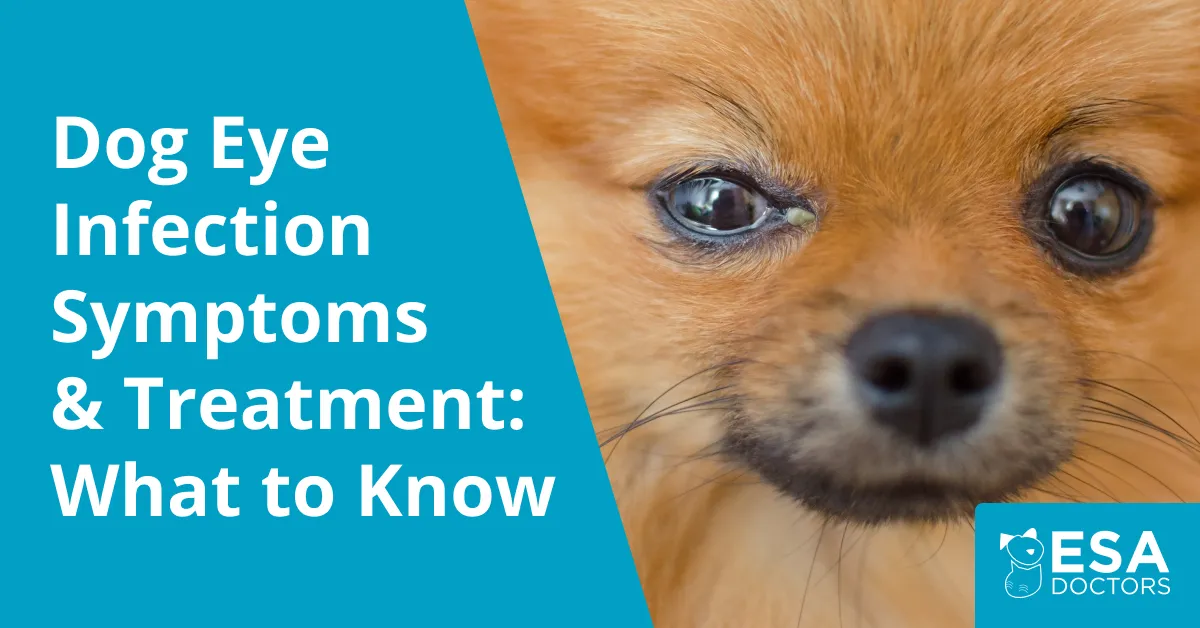
 Dog eye infections are common and usually clear quickly with treatment. ‘Conjunctivitis’ refers to the inflammation we see in a dog’s eye when it has an eye infection. However, there are some more serious conditions with the same symptoms. This means it’s important to see a vet if your dog is showing signs of an eye infection. Treatment for your dog’s eye infection will depend on the cause.

What is conjunctivitis?
The conjunctiva is a thin layer of tissue that covers the front of the eye and the inside of the eyelids. Conjunctivitis (or ‘pink eye’) means inflammation of the conjunctiva, causing the eyes to look red, sore, and often gunky.
Conjunctivitis in dogs can be caused by many different conditions, so you mustn’t always assume your dog has an eye infection!
What are the symptoms of conjunctivitis in dogs?
Conjunctivitis can affect both eyes or only one. You may see:
- Red, bloodshot eye(s)
- A discharge from the eye(s) which may look clear, greeny yellow, brown, or white
- Swelling around the eye(s)
- Blinking more than usual
- Holding the eye(s) closed
- Cloudy eye(s)
- Rubbing the face with a paw, or on furniture and carpets
You may also notice that your dog is subdued, lethargic, or not quite themselves. This is usually because conjunctivitis can be painful.
What causes conjunctivitis in dogs?
There are many eye conditions that can cause similar symptoms in dogs. Let’s take a look at some common causes of conjunctivitis symptoms in dogs:
Infection
Various bacteria can cause eye infections in dogs. If your dog suffers from recurring eye infections, there is likely to be an underlying cause. This is called a ‘secondary infection’ (meaning the bacterial infection is happening due to an underlying cause, such as ingrowing eyelashes).
Several viruses can cause eye infections in dogs, such as the distemper virus. Thankfully, this is very rare nowadays, as we can vaccinate against these viruses.
Allergies
Dogs with allergies can experience sore, itchy eyes when their allergies flare, much like people with hay fever. Common allergies in dogs include pollen and grasses.
Irritants
Even dogs without allergies can experience sore, gritty eyes if they come into contact with irritants such as dust, sand, or chemicals. Similarly, smoking around your dog can cause them to suffer from conjunctivitis.
Foreign Body
Having something stuck (a ‘foreign body’) in the eye, such as a grass seed, will cause conjunctivitis. The foreign body is not always visible, as it can be stuck behind the eyelids.
Injury
A scratch or graze to the surface of the eye can cause a corneal ulcer (an ulcer on the surface of the eye).
Problems With the Eyelids Or Lashes
If the eyelids or eyelashes sit in the wrong position, they can rub against the eye, causing irritation and inflammation. Examples include entropion (eyelids rolling inwards) or distichiae (extra eyelashes which often rub the surface of the eye). Ectropion, where the eyelid sags or rolls outwards, can also cause conjunctivitis.
Lumps on the eyelids can rub against and irritate the eye’s surface, causing conjunctivitis.
Dry Eye
Dry eye, or ‘keratoconjunctivitis sicca’ (KCS), is fairly common in dogs. Dogs with KCS cannot produce enough tears, so the eyes become dry and inflamed.
Keratitis
If a dog’s eyelids don’t close properly, the surface of the eye is not properly protected. This is called ‘exposure keratitis’, which is common in brachycephalic breeds.
Chronic superficial keratitis can happen when a dog’s immune system actually attacks the front of the eye. This autoimmune condition is called Pannus.
Others
Other conditions, such as uveitis (inflammation of the middle part of the eye) and glaucoma (increased pressure in the eye), can have similar symptoms to conjunctivitis.
How do I know if my dog has an eye infection?
As you can see, with so many conditions causing similar symptoms, it can be very hard to tell if your dog has an eye infection or something else going on!
There are some clues to watch for; for example, a bacterial infection will often cause a yellow or green, sticky discharge. A bacterial infection is less likely if the discharge is clear and watery. If your dog is holding their eye closed, it may indicate a more serious issue, such as a foreign body or a corneal ulcer. Dry eye often causes a brownish discharge or crusting. However, this is not always the case!
Your veterinarian is best placed to decide what’s causing the problem with your dog’s eyes. If needed, they can examine the back of the eye, check for damage to the cornea (the surface) with a special dye, measure tear production, measure the pressure within the eye, and check for foreign bodies or abnormalities of the eyelashes and lids.
There are a few red flags that indicate your dog may have something more serious than a simple eye infection, so let’s look at when to see a vet.
When To See a Vet
If you think your dog has an eye infection or you notice any of the symptoms of conjunctivitis, it’s safest to have them checked by your vet. Some of the conditions causing these symptoms can become serious quickly and could affect your dog’s vision. Even simple eye infections can be secondary to another condition, so they will keep coming back unless the underlying issue is also treated.
Red flags that indicate an ocular emergency include:
- Bulging or swollen eye(s)
- Holding the eye(s) closed
- Cloudy eye(s)
- Different-sized pupils (the black portion of the eye)
- Pupil(s) not responding to light
- Vision loss
- Severe pain
- A visible foreign body or penetrating wound.
If you notice any of these, seek emergency veterinary care as soon as possible. Having pet insurance in place can relieve some of the stress of an ER visit!
Although mild conjunctivitis may resolve on its own, it can be uncomfortable for your dog. If left untreated, dog eye infections can last for weeks (and may worsen during that time). Getting treatment from your vet means they should recover faster, often improving within a few days. Your vet can also prescribe pain relief if needed.
Treatment for Conjunctivitis in Dogs
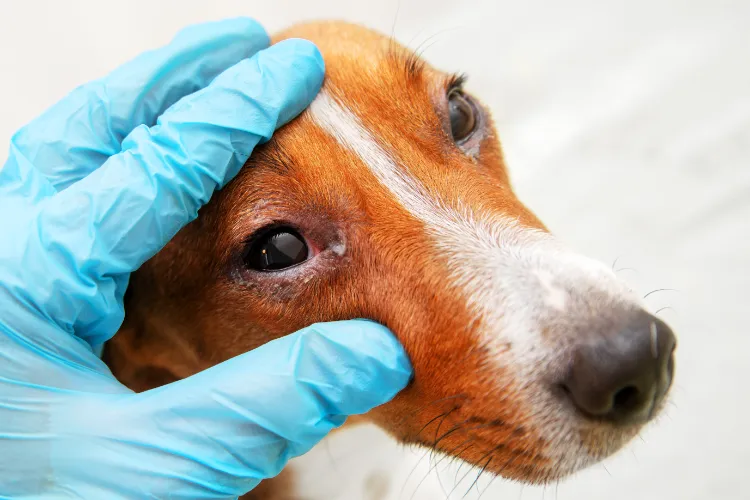
The treatment for your dog’s conjunctivitis will depend on the cause. For example, bacterial eye infections in dogs will need antibiotic eye drops. In serious infections, your veterinarian may take a swab from your dog’s eye. This can tell them which type of bacteria are causing the infection, and which antibiotic drops would be best.
Treatment for viral eye infections is symptomatic, meaning it aims to keep your dog comfortable while the infection runs its course.
Allergic or irritant conjunctivitis may require anti-inflammatory eye drops or, sometimes, allergy treatment by mouth.
If your dog has a foreign body, your vet will remove it. Often this can be done under a local anaesthetic, but sometimes sedation is needed. Corneal ulcers caused by a foreign body or other injury often heal with antibiotic eye drops and pain relief. More serious ulcers may need special serum drops or even surgery, so corneal ulcers need close monitoring while they heal.
Your dog will need surgery if they have problems such as extra eyelashes, entropion, or ectropion. Without surgery to correct the underlying issue, your dog will suffer from ongoing, repeated bouts of conjunctivitis.
Keratoconjunctivitis sicca (KCS) and pannus are treated with immune-modulating eye drops and artificial tears.
Home Remedies for Dog Eye Infections
It’s always safest to seek veterinary treatment for dog eye infections. You should never use eye drops left over from a previous infection or another dog. They are likely to be out of date, meaning they may not work. More seriously, they may be contaminated with bacteria and so could make your dog’s eye infection much worse. Similarly, you should never use human eye drops unless instructed by your vet.
There are some measures you can take at home to keep your dog comfortable while you wait for their veterinary appointment, or while the treatment works:
- Gently wipe your dog’s eyes as often as needed with cotton pads and boiled water that has been left to cool down.
- Prevent your dog from rubbing their eyes (which causes more damage) by using a buster collar.
- Avoid potential irritants such as plug-ins or cigarette smoke.
If your dog’s symptoms are not improving, contact your vet for advice.
How To Prevent Dog Eye Infections
Unfortunately, there is no magic prevention for dog eye infections! However, you can reduce the risk by keeping them up to date with vaccinations, taking them for regular health checks, and practicing good hygiene. This could include gently wiping their eyes every day if needed and having them groomed regularly. It’s also safest to avoid smoking around your dog, and keep them out of the area if you are using cleaning sprays or aerosol products.
Remember, you know your dog best! If you have any concerns, trust your gut and contact your veterinary clinic for advice.
Does your dog help you overcome anxiety or depression?
Get your ESA letter in 3 easy steps, so your dog can live with you as an emotional support animal.


Leave a Comment