
 Written by:
 The signs and severity of plant poisoning in cats will depend on which plant they have eaten, and how much. For example, even a tiny amount of any part of a Lily can be fatal in cats. If you think your cat has eaten a poisonous plant, call your veterinarian straight away.
Every pet owner should know which plants may be toxic, the signs to watch for, and when to contact your vet.
What are the risks of poisonous plants for cats?
Unlike dogs, cats tend to be pretty selective about what they eat. Thankfully, this means poisoning cases in cats are less common than in dogs. However, they do still happen, so it’s important to be aware of the risks!
Some cats are at greater risk of eating poisonous plants than others. Young, inquisitive kittens are more likely to explore with their mouths, especially during key developmental stages when socialization and learning occur. Indoor-only cats are also more likely to chew on house plants, particularly when adjusting to a new home or environment. Outdoor cats tend to find other ways of entertaining themselves. However, even cats who don’t usually chew may be tempted to explore new additions to the home (such as plants). Cats also like to chew on some grass from time to time, so cats who don’t have access to any grass are more likely to chew on plants as an alternative.
How toxic a plant is to a cat depends on the type of plant, the part ingested, and how much is eaten. For example, Lilies are extremely toxic to cats, and ingesting even a small amount can cause kidney failure. Sadly, Lily poisoning in cats can be fatal.
What are the symptoms of plant toxicity in cats?
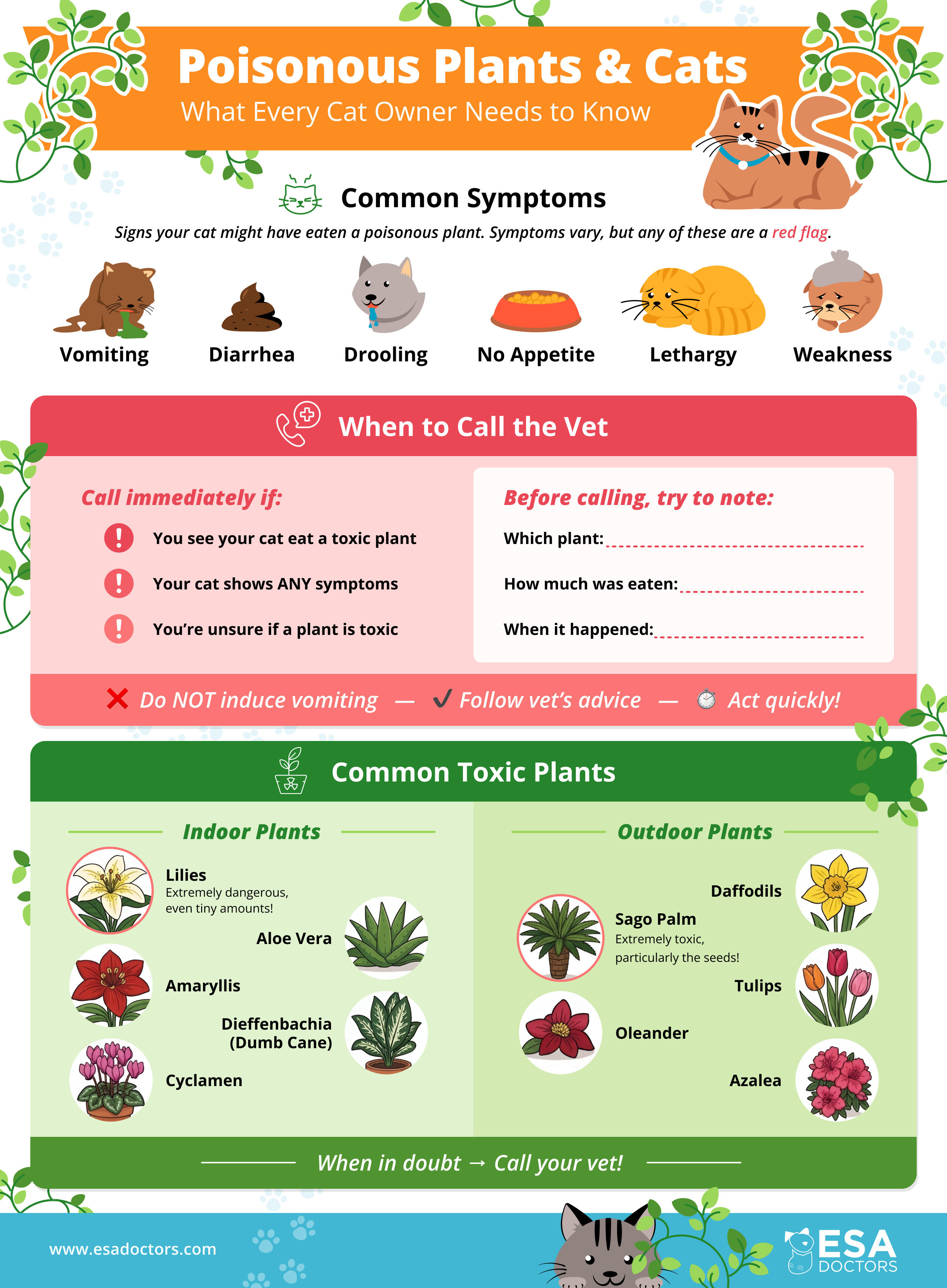
The exact symptoms of plant toxicity will depend on the plant ingested. However, common signs of plant toxicity in cats to watch out for include:
- Sickness
- Diarrhea
- Drooling
- Poor appetite
- Lethargy (being more tired than usual)
- Weakness
- Collapse
- Swelling of the skin or mouth, which may appear red or blistered
If you notice any of these signs in your cat, you should call your veterinarian straight away, even if you haven’t seen them eat anything they shouldn’t, as subtle changes in cat behavior can often be the first indication that something is wrong.
Common Toxic Plants for Cats
Many harmful (especially outdoor) plants taste bitter and unappealing, meaning cats aren’t likely to eat large quantities. Thankfully, this means many cases of plant toxicity in cats are treatable, especially if the treatment is started early. However, some plants are extremely toxic, meaning your cat would only need to eat a small amount for them to become seriously unwell. For example, eating only a small amount of Deadly Nightshade berries could be fatal for cats.
It’s safest to check whether any plant is safe for your cat before purchasing. You can find a comprehensive list of plants poisonous to cats here. Let’s take a look at some of the more common indoor and outdoor plants that are toxic to cats.
Common Toxic Indoor Houseplants for Cats
5 common indoor plants that are particularly toxic to cats include:
Lilies
Lilies are extremely dangerous for cats. All parts of the plant are toxic, so even ‘pollen-free’ lilies need to be avoided. Eating a tiny amount of any part of the plant (or even drinking some of the water from the vase) can be fatal to cats.
Cats will often brush up against things around the house, including plants. Pollen can then stick to their coat, meaning they ingest some when they next groom themselves. This is a common route of Lily toxicity in cats.
Signs of Lily poisoning in cats include drooling, sickness, diarrhea, anorexia, and lethargy. Sadly, Lily poisoning often leads to kidney failure and can be fatal.
Amaryllis
Amaryllis plants are a popular gift, especially around the festive holidays! Unfortunately, they contain phenanthridine alkaloids, which are poisonous to cats. These are found in the stalk, flowers, and especially the bulb.
Signs of Amaryllis toxicity in cats include sickness, tremors, altered blood pressure, and seizures.
Cyclamen
Another popular houseplant often given around the holidays is Cyclamen. These plants contain saponins, which are highly irritating. If your cat ingests any, they may experience sickness, diarrhea, and even heart failure if they eat enough.
Aloe Plant (Aloe Vera)
This is a popular houseplant due to its usefulness to pet parents. However, if your cat manages to get hold of it, they may experience sickness, diarrhea, and tremors.
Dieffenbachia
This is a common houseplant, also known as ‘dumb cane’. If eaten, it can cause irritation in the mouth, swelling of the mouth and throat, and difficulty swallowing.
Other common examples of toxic houseplants include: Philodendron, Pothos (Devil’s Ivy), Indian rubber plant, and Mistletoe. This list is not exhaustive, so it’s always safest to check before you purchase any houseplants.
Common Toxic Outdoor Plants for Cats
5 common outdoor plants that are particularly toxic to cats include:
Daffodils
As cheerful as they are to look at, Daffodils contain an alkaloid that is poisonous and causes sickness. The bulbs are especially dangerous because they contain toxic crystals that can cause abnormal heart rhythms or a reduced breathing rate.
Tulips
Similar to daffodils, the bulbs are the most toxic part of tulips. Symptoms include sickness, diarrhea, drooling, and depression. If eaten in large quantities, they can cause an increased heart rate, abnormal heart rhythms, changes in breathing, tremors, and even coma.
Azalea and Rhododendrons
If eaten by your cat, these popular ornamental shrubs can cause sickness, diarrhea, drooling, and even cardiac issues.
Sago Palm
Sago palm is a popular outdoor plant that makes your garden look somewhat tropical. Unfortunately, every part of the plant is toxic. It can cause sickness, diarrhea, and in more serious cases, liver damage.
Oleander
Oleander is popular with gardeners due to its beautiful blooms and suitability for poor-quality soils. Unfortunately, it’s toxic to cats! Ingestion can cause sickness, dehydration, palpitations, high blood pressure, and shock.
Other common examples of toxic outdoor plants include: Foxglove, Deadly Nightshade, Yew, Crocus, Widow’s Thrill (Kalanchoe), Gladioli, Iris, Hyacinths, and Chrysanthemums. Again, this list is not exhaustive, so it’s always safest to check all your plants.
How To Prevent Plant Poisoning in Cats
As with most things, prevention is better than cure, and taking steps to reduce risks in your home is an important part of helping your cat live a longer, healthier life. Houseplants are a great way to bring nature indoors, decorating your home and purifying your air at the same time. However, it’s a good idea to learn the most common poisonous houseplants, so you can be sure never to bring them into your home.
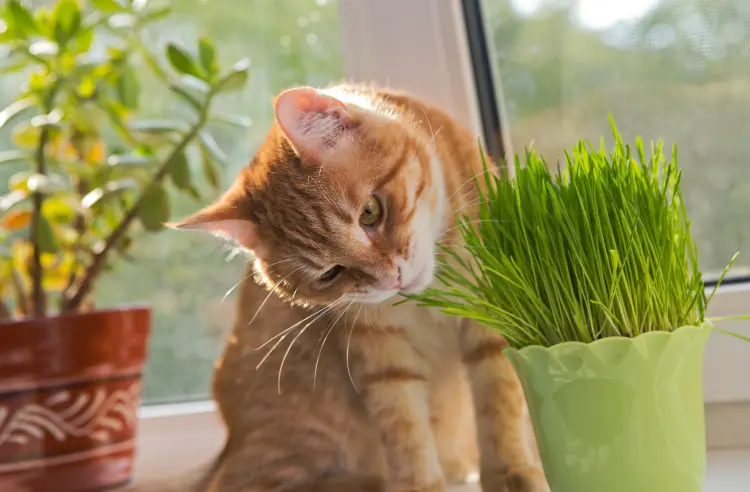
Check all your current houseplants are safe for your cat, and remove any that aren’t. Even if you think your cat doesn’t chew on things, it’s always better to be safe than sorry. Keep potentially toxic plants out of your home. You can check which plants are safe for cats here. You can always grow some kitty grass for your cat indoors, allowing them to graze if they wish.
Outdoor plants are a little trickier, since outdoor cats tend to roam freely into other people’s gardens. Luckily, outdoor cats are less likely to chew on plants than indoor cats. It’s safest to remove any poisonous plants from your own garden, where your cat probably spends most of their outdoor time. Make sure any new plants are cat-safe.
When you are gardening, keep all clippings, bulbs, or uprooted plants away from your cat, so they can’t be tempted to play with or chew them.
What To Do if Your Cat Ingests a Poisonous Plant
Although easier said than done, try to stay calm! If you see your cat eating a toxic plant, remove access to any further plant material straight away. Take a photo of the plant, the plant label, or make a note of which plant it was. Try to record how much they’ve eaten and the time. Call your veterinary clinic immediately and provide these details. They may ask you to bring your cat straight in. In poisoning cases, the sooner treatment is started, the better.
You should never try to treat your sick cat yourself, as it can cause more harm than good. Your veterinarian will advise you as to the next steps, so always follow their instructions.
It’s a good idea to familiarise yourself with the symptoms of plant poisoning in cats. Sadly, we don’t always actually see our cats eating something they shouldn’t, so it’s important to know the signs to watch out for. If your cat is showing any of the signs listed above, you should call your veterinary clinic straight away for advice.
The treatment your cat receives at the veterinary hospital will depend on what they have eaten. Treatment is likely to consist of supportive care and symptomatic treatment (treating any signs your cat is showing). In more severe cases, your cat will need to stay in the hospital for treatment and monitoring. Treatment could include anti-sickness drugs and intravenous fluid therapy (a drip), for example.
Key Points
Familiarise yourself with the most common toxic plants, both indoor and out, and remove them from your home. Always check if any new plants are safe for your cat before you buy. If you think your cat has been exposed to a potentially toxic plant, or they seem unwell, contact your veterinary clinic right away. If you see your cat eat a toxic plant, make a note of what it was, how much they ate, and the time, so you can tell your veterinarian. With these simple tips, you and your cat can safely enjoy nature together!
Does your cat provide emotional support?
Work with a licensed professional to get a legit ESA letter in your state.

Leave a Comment