
 Written by:
 Trazodone is a human medication that is also used to treat various behavioral disorders in dogs. The dose and frequency will depend on the intended use, so always follow your vet’s instructions carefully. It’s considered a relatively safe drug when used appropriately, and side effects are rare. However, in general, you should never give your dog medication unless it’s been prescribed by your vet.
What is Trazodone?
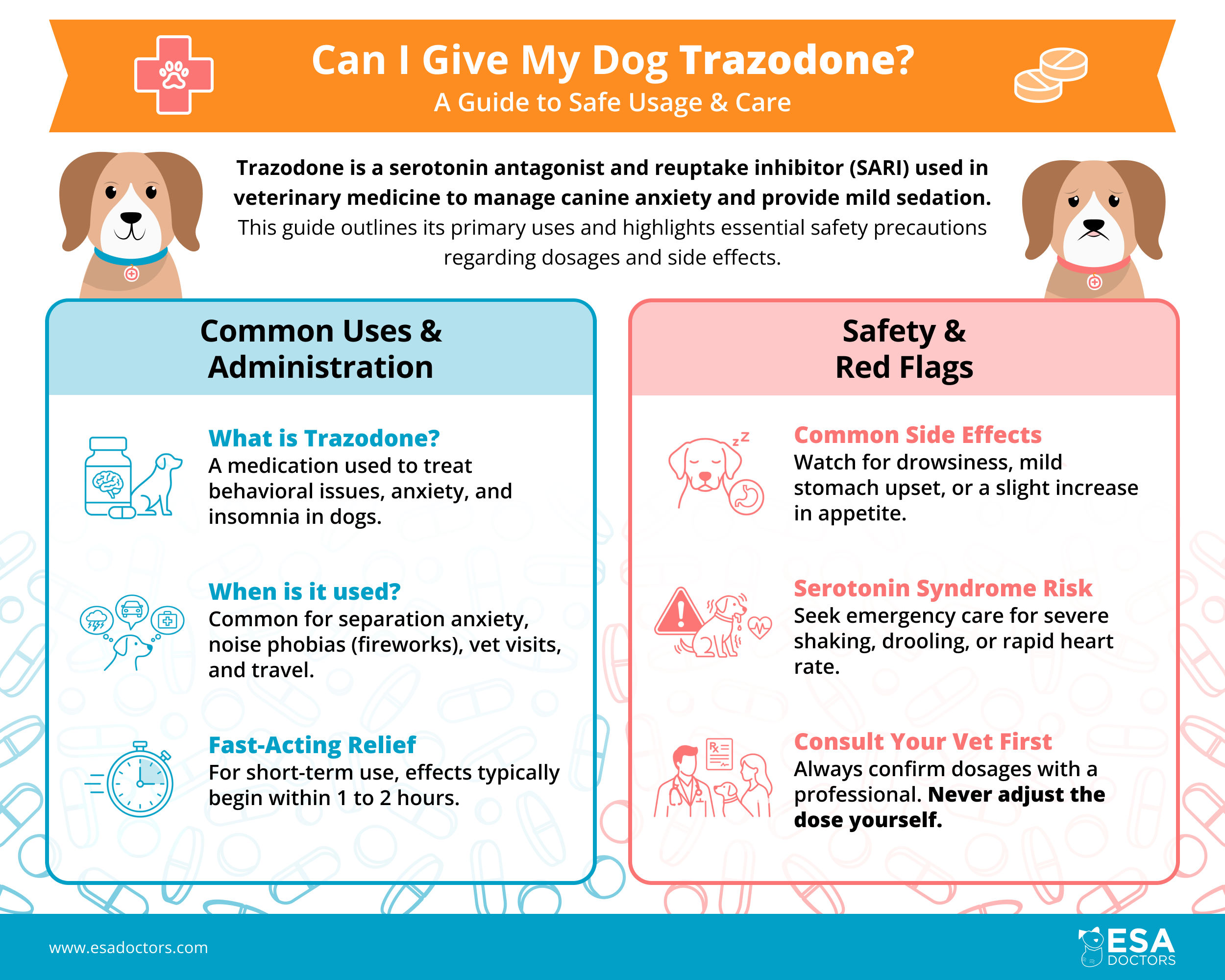
Trazodone is a medication for humans, used to treat depression, insomnia, and anxiety in people. Its use in veterinary medicine is ‘off’ or ‘extra’ label, meaning that vets can prescribe it to some pets, in some circumstances.
Trazodone is a serotonin antagonist and reuptake inhibitor (SARI). It works by increasing serotonin (the happy hormone!) in the central nervous system. This makes it a useful drug for treating some behavioral conditions in dogs. It also acts as a mild sedative.
It’s important to note that you should never give trazodone to your dog unless your vet has prescribed it. It may not be effective for your dog’s condition and, more importantly, may not be safe for your dog.
Common Uses of Trazodone in Dogs
Trazodone in dogs is used to improve mood, reduce anxiety, and as a mild sedative. This may include a variety of situations in dogs:
- Separation anxiety
- Noise phobias (such as fireworks or thunderstorms)
- Anxiety around a vet visit
- To reduce anxiety and induce mild sedation in a crate or kennel (such as during hospitalization for treatment, or after surgery)
- Travel anxiety
- Anxiety-related behavioral problems, such as fear and aggression
Sometimes trazodone is used on its own, but more commonly, your vet may prescribe it to be used alongside other behavior drugs. Behavioral modification drugs always work best when given alongside working with an accredited veterinary behaviorist. Your vet can refer you if needed.

Trazodone Dose for Dogs
The dose and frequency will vary depending on the condition being treated, your dog’s weight, underlying health, and any other medication they are taking. So, make sure you read your vet’s instructions carefully. Your vet may start at a low dose and gradually increase it and the frequency as needed.
You should never adjust the dose yourself; always give trazodone as instructed by your vet.
For short-term use, trazodone starts working within 1–2 hours and lasts around 6–12 hours. For longer-term behavioral use, it can take a couple of weeks to kick in. Trazodone is usually prescribed for short- to medium-term use, although it can be used longer if needed.
Side Effects of Trazodone in Dogs
All drugs can have side effects, and trazodone is no different. However, side effects aren’t common and are usually mild. Trazodone is a ‘short-acting’ drug, meaning the effects usually don’t last long. The most commonly seen side effects include:
- Drowsiness (sometimes this is a desired effect!)
- Nausea or sickness
- Diarrhea
- Increased or decreased appetite
So, the biggest side effects of trazodone in dogs are excessive sedation or stomach upset, though luckily, these are uncommon. Giving trazodone with food can reduce the risk of side effects, especially those relating to the gut.
Less commonly seen side effects include:
- Increased anxiety or agitation
- Aggression
- Fast heart rate
- Ataxia (being wobbly or unsteady on their feet)
It’s safest to stay with your dog and monitor them after the first couple of doses. Every dog is different, so your dog may be more sedated than expected. If this is the case, their dose may need to be adjusted.
Your vet may advise giving the first dose as a ‘test dose’ when your dog is calm at home, and no stressful events are expected. They would ask you to note how long it took to work, how long the effect lasted, and if you noticed any side effects. This enables your vet to determine the best dose for your dog’s needs before it is actually needed during a stressful event.
If your dog experiences any side effects while taking trazodone, contact your vet for advice.
Signs of an Overdose
The signs of an overdose will be the same as the possible side effects, only more severe. In rare cases, taking trazodone can cause ‘Serotonin Syndrome’.
Serotonin Syndrome
If your dog is taking any other drugs that also affect serotonin levels (such as antidepressants), alongside trazodone, there is a risk of something called ‘serotonin syndrome’. Signs of serotonin syndrome include:
- Sickness
- Drooling
- Diarrhea
- Tremors or Seizures
- High body temperature
- Increased sensitivity to sensory input (such as touch) (hyperesthesia)
- Depression
- Dilated pupils, vision issues
- Vocalising
- Difficulty breathing
- Fast or slow heart rate
- Abnormal heart rhythm (arrhythmia)
- Ataxia
- Coma
Sadly, serotonin syndrome can be fatal. If you know or suspect that your dog has had an overdose of trazodone, or you notice any signs of serotonin syndrome, contact your vet as an emergency straight away.
Cautions When Giving Dogs Trazodone
Trazodone has to be used with care in dogs with heart, liver, or kidney disease. Dogs with liver or kidney disease will take longer to metabolize the drug, so the effects may be prolonged.
Trazodone can interact with some other drugs. For example, some antifungals and antibiotics can enhance the effects of trazodone, increasing the risk of side effects. On the other hand, some other medications may make trazodone less effective. It’s important that you tell your vet if your dog is taking any other medications or supplements.
Key Points
Trazodone can be a very useful drug for anxiety-related behavioral disorders in dogs when used alongside behavioral therapy. It is often used alongside other medications.
The main uses of trazodone in dogs are in short-term anxiety-inducing events (such as visiting the vets) or in anxiety-driven behavioral problems.
The dose in dogs differs from that in humans and depends on your individual dog’s needs. Always follow your vet’s instructions carefully. You should never give trazodone to your dog unless it’s been prescribed for them by your vet.
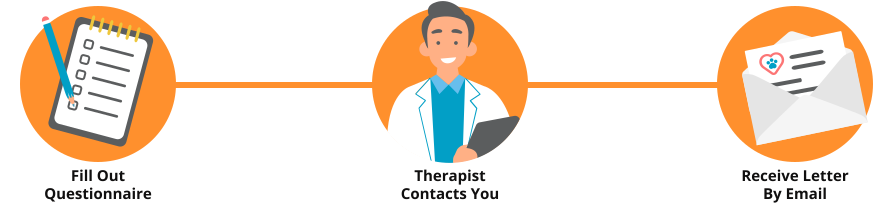
Do you need to show your landlord that you require your emotional support animal to live with you? Get an ESA letter in 3 easy steps.




Leave a Comment