
 Written by:
 Fleas and ticks are more than just an irritation for cats. These parasites can cause itching, skin problems, allergic reactions, and may contribute to disease spread. Regular parasite prevention is an important part of keeping cats healthy, whether they live indoors, outdoors, or both.
Frontline Plus for cats is a topical flea and tick treatment designed to help protect cats from flea infestations, flea eggs, flea larvae, ticks, and chewing lice. It targets adult parasites while also breaking the flea life cycle to help prevent reinfestation.
What is Frontline Plus for Cats?
Frontline Plus is a spot-on parasite treatment applied directly to a cat’s skin, usually at the base of the neck between the shoulder blades. It contains two active ingredients:
- Fipronil: an insecticide that kills adult fleas and ticks
- (S)-methoprene: an insect growth regulator that targets the immature flea stages, helping prevent flea eggs and larvae from developing into adult fleas
Some parasite treatments only target the pests living on your pet. By combining these two ingredients, Frontline Plus works against both the existing flea population on your cat and the next generation of fleas developing in the environment.
What does Frontline Plus treat?
Frontline Plus for cats helps control several common feline parasites.
1. Fleas
Fleas are one of the most common external parasites affecting cats. But are they really a problem? Sadly, it’s a common myth that fleas just cause minor itching. In reality, fleas can cause major irritation, skin problems, and more.
Flea infestations can lead to:
- Intense itching and scratching
- Hair loss from excessive grooming
- Skin irritation, open sores, and secondary infections
- Flea allergy dermatitis (FAD)
- Anemia in severe infestations, particularly in kittens
Frontline Plus’s dual-action formula both kills adult fleas and also helps stop flea eggs and larvae from developing, helping break the flea life cycle.
2. Ticks
Ticks attach to cats to feed on blood and may transmit diseases such as Lyme disease and anaplasmosis. Frontline Plus kills several tick species and helps reduce the risk associated with tick infestations.
3. Chewing lice
Lice can be highly irritating to cats and disrupt the skin barrier. Frontline Plus can effectively eliminate chewing lice infestations in cats.
How does Frontline Plus work?
After application directly onto your cat’s skin, Frontline Plus spreads through the natural oils of the cat’s skin and coat. The active ingredients remain associated with the skin and hair, where they continue to work against parasites.
Fipronil affects the nervous system of fleas and ticks, causing them to die after exposure. Meanwhile, (S)-methoprene prevents flea eggs and larvae from developing, helping interrupt the flea breeding cycle.
Because fleas can live in the home environment, treating the cat alone may not remove every flea immediately, with re-infestation being a common problem. Flea eggs and larvae may already be present in carpets, bedding and soft furnishings, so ongoing prevention is often needed.
How to Apply Frontline Plus for Cats
Frontline Plus comes in easy-to-use pipettes designed for single-use, spot-on application.
To apply:
- Remove one pipette from the packaging.
- Open the applicator as directed.
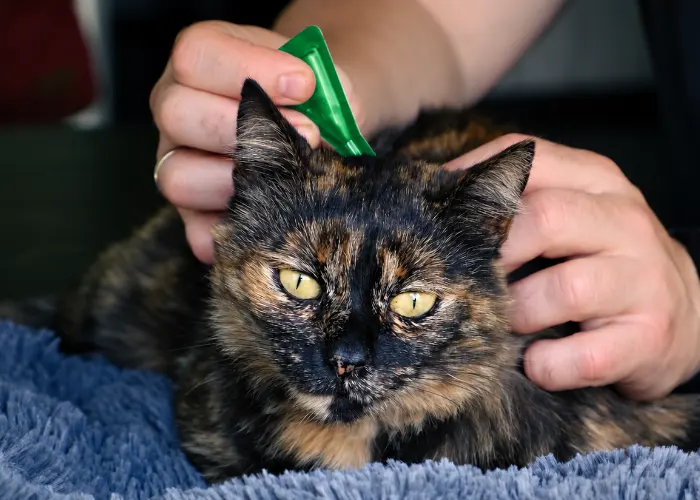
- Part your cat’s fur at the base of the neck until the skin is visible.
- Apply the full contents directly onto the skin.
- Allow the area to dry and avoid touching the application site until dry.
It is important to apply the product to the skin rather than the hair coat so it can spread properly. The back of the neck is commonly used because it is easy for owners to access but difficult for the cat to reach and lick.
How long does Frontline Plus last on cats?
Frontline Plus for cats is designed to provide ongoing flea and tick protection for around one month when used as directed. It continues working after application by spreading through the cat’s natural skin and coat oils.
Frontline Plus may control fleas for up to around six weeks, but regular monthly treatment is recommended where there is a risk of reinfestation or where flea allergy dermatitis is a concern.
For tick control, Frontline Plus provides protection for at least one month, so monthly application is recommended where cats are at risk of tick exposure.
How often should you reapply Frontline Plus for cats?
Frontline Plus should generally be reapplied every 4 weeks (i.e., monthly) to maintain consistent flea and tick protection. Do not apply more frequently than recommended on the product label.
My top tip as a busy veterinarian and cat owner? Each time you apply, make a note on your phone or calendar for a month – it’s easy to forget!
Monthly treatment is especially important for:
- Outdoor cats that explore gardens, woodland or fields
- Cats living with other pets that may bring fleas into the home
- Cats with a history of flea infestations or flea-allergy dermatitis (FAD)
- Cats at risk of tick exposure
Because flea eggs and larvae can survive in the home environment even after you kill the adult fleas on the cat, it may take several weeks to control an infestation fully. Consistency is key! Regular treatment, combined with environmental cleaning, helps prevent the flea life cycle from restarting.
Is Frontline Plus safe for cats?
Frontline Plus is formulated for cats and kittens that meet the minimum age and weight requirements on the product label. It can be used on many cats, including kittens (over 8 weeks and at least 1.5lbs in weight) and pregnant and lactating queens, when used according to the instructions.
However:
- Never use dog flea treatments on cats unless specifically advised by a veterinarian.
- Do not use products containing ingredients that are toxic to cats
- Always check the label before applying any parasite treatment
- Do not apply more than one pipette at a time, or apply more frequently than monthly, unless advised by a veterinarian
If your cat is unwell, very young, elderly, pregnant, or taking medication, speak with your vet before using a flea treatment.
Possible Side Effects of Frontline Plus for Cats
Frontline Plus is generally well tolerated by cats when used as directed. However, as with any flea and tick treatment, some cats may experience mild reactions after application.
Possible side effects may include:
- Temporary irritation, redness, or itching at the application site
- Hair changes or temporary hair loss where the product was applied
- Increased grooming or scratching around the treated area
- Drooling or hypersalivation if the cat licks the product before it dries
- Rarely, signs such as vomiting, lethargy, or changes in behavior
Always use the correct product for cats and follow the dosage instructions carefully. If your cat shows unusual or severe symptoms after applying Frontline Plus, contact your vet for advice.
Frontline Plus vs Other Flea Treatments
Many flea and tick products are available, and the best option depends on your cat’s lifestyle and parasite risks. Frontline Plus focuses on flea control, flea life-cycle disruption, ticks, and chewing lice.
Some products target a wider range of parasites, while others focus mainly on fleas and ticks. For example, Revolution for cats uses selamectin and protects against fleas plus additional parasites such as ear mites and some intestinal worms, depending on the formulation.
Your veterinarian can discuss a tailored parasite-prevention plan for your cat that fits their specific needs and environment.
Frequently Asked Questions
Frontline Plus begins working straight after application and kills fleas and ticks that come into contact with the treated cat.
Yes. Indoor cats can still be exposed to fleas brought into the home on clothing, shoes, other pets, or visitors.
Frontline Plus helps prevent flea eggs and larvae from developing by using (S)-methoprene, helping break the flea life cycle.
Frontline Plus is approved for kittens that meet the minimum age and weight requirements stated on the product label (currently approved for kittens over 8 weeks and at least 1.5lbs in weight).
If your cat has a flea infestation, you may need to treat the home environment because flea eggs and larvae can survive away from the pet.
If you realize you have missed a routine monthly dose, apply it as soon as you remember. Then, reset your monthly schedule to follow from that date. Missing doses will leave your cat vulnerable to fleas, so consistent application is recommended.
Does your cat help you overcome anxiety or depression?
Get your ESA letter in 3 easy steps, so your dog can live with you as an emotional support animal.



Leave a Comment